Best snow blower: Expert recommendations to choose
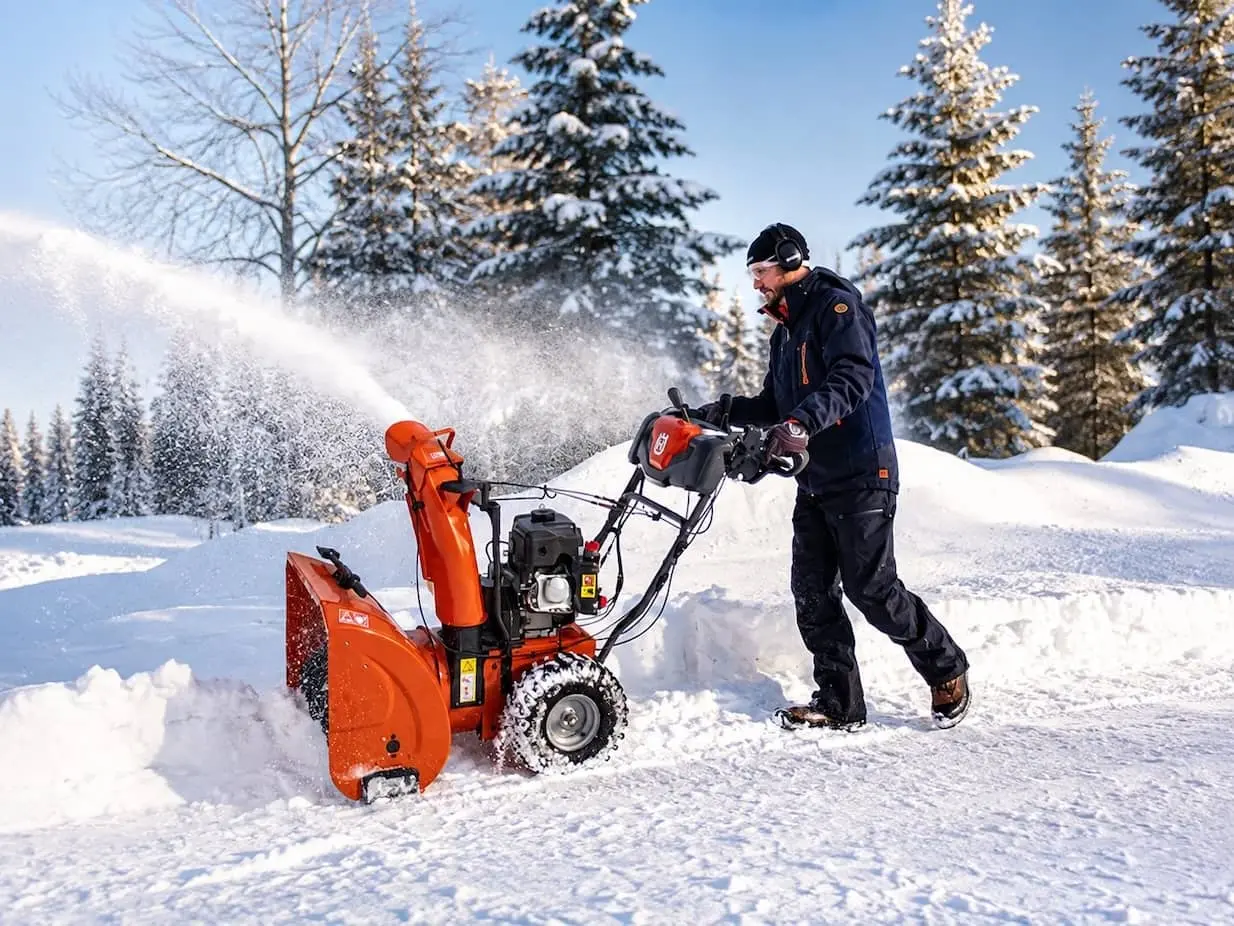
The best snow blower is not necessarily the widest or most powerful machine you can fit in your garage. It should match the depth and consistency of your usual snowfall, the size and surface of your driveway, and; just as important….how much machine you are willing to maneuver and maintain. After comparing current specifications with available real-world testing, these are the five options we would consider first.
Ariens Classic / Deluxe / Compact Series
Ariens does not make choosing easy, since its Classic, Compact, and Deluxe machines look similar and are all capable two-stage gas blowers. The good news is that there is no obviously bad choice here. The Classic is the value option, the Compact improves maneuverability and component quality, and the Deluxe supplies the extra capacity needed for deeper, heavier snow.
The current Classic 24 pairs a 24-inch housing with a 212 cc engine and 11-inch steel auger. Ariens rates it to move 58 tons per hour and throw snow as far as 40 feet. Its electric start and one-hand interlock cover the important conveniences, but it lacks the effortless Auto-Turn steering found farther up the range. Still, this is the model we would start with for a typical two-car driveway and moderate snowfall.
Moving to the Compact 24 gets you a 223 cc engine, Auto-Turn steering, 15-inch tires, and a cast-iron rather than aluminum gear case. Its 59-ton-per-hour rating is only marginally higher than the Classic’s, so the real upgrade is how the machine handles and how substantial its drivetrain feels….not a dramatic jump in clearing speed. A RapidTrak version is also available for steep or slippery ground.
The Deluxe line is where Ariens begins to make sense for areas that routinely receive deep or wet snow. Its models span 24 to 30 inches, use 252 cc to 306 cc engines, and add a 21-inch housing, 14-inch serrated auger, Auto-Turn steering, and a dual-belt drive. Ariens rates the series for 62 to 72 tons per hour and throwing distances up to 50 feet. The company notes that a Classic 24 may keep pace with a Deluxe in 8 to 10 inches of snow, but the larger Deluxe machines can maintain their speed when a smaller blower has to slow down.
We think the Classic 24 offers enough machine for most homes, while the Compact is worth considering if easier turning or a track option matters. Buy a Deluxe….particularly the Deluxe 24 or 28, if heavy storms are normal rather than exceptional. All three require fuel management, seasonal engine maintenance, and more storage than a single-stage blower; paying for the Deluxe will not make those obligations disappear.
Toro Power Clear
Not every snowfall requires a 200-pound two-stage machine. For a paved driveway that usually receives less than about 9 inches at a time, the Toro Power Clear is faster to retrieve, easier to turn, and more likely to leave a clean surface. On the 21-inch Power Clear 721 E, the rubber paddle remains in contact with the ground, helping pull the machine forward while scraping close to the pavement. Its 212 cc engine has electric start, and Toro claims a maximum throwing distance of 35 feet.
The limitation is built into the same design: because the paddle contacts the surface, this is not the blower to use on gravel, and deep plow piles or dense slush may require narrower, slower passes. Buyers who want less noise and no gasoline can choose the 60-volt Power Clear e21; Toro rates the 7.5 Ah version for 2 to 9 inches of snow on an area equivalent to a 12-car driveway, though cold temperatures and wet snow can reduce that estimate.
Honda HSS Series
The Honda HSS series is expensive enough that most homeowners should first consider an Ariens or Toro. But its combination of track drive, adjustable auger height, and hydrostatic transmission is unusually well suited to steep driveways, icy surfaces, and places where a snow blower is essential equipment rather than an occasional convenience.
Unlike a conventional transmission with several fixed gears, Honda’s hydrostatic drive allows small, continuous speed adjustments without changing auger speed. That makes it possible to creep into a packed plow bank without starving the impeller of power, then speed up once conditions become easier. Track models also let you raise the housing over rough ground or press the auger down into hard-packed snow.
The HSS724 clears a 23.8-inch path and is rated for up to 1,500 pounds per minute and a 49-foot throw. The HSS928 widens the path to 28 inches and increases Honda’s ratings to 1,900 pounds per minute and 52 feet. For exceptionally large properties, the HSS1332 reaches 31.9 inches, 2,750 pounds per minute, and 56 feet.
This level of control comes with more cost, weight, and complexity than many driveways justify. Also check the suffix carefully: track and wheel configurations differ, and DC electric start is limited to designated “D” versions. The HSS series is an upgrade for difficult terrain and sustained heavy snowfall, not an automatic better buy for a short, level suburban driveway.
Toro Power Max
The Toro Power Max 824 OE is the machine we would choose for wet accumulations and the compacted wall left at the end of a driveway by a street plow. Its 252 cc engine powers a 24-inch-wide, 20-inch-high intake, while six forward and two reverse speeds let you slow the machine without having to force it through dense material. Toro’s Anti-Clogging System redirects excess snow toward the auger, and the Quick Stick adjusts both chute rotation and deflector angle with one control.
Those features translate into more than an impressive spec sheet. In one independent test, the 824 OE cleared 8 inches of standing snow and then cut through a roughly 13-inch plow pile. The tester measured a typical throw of about 30 feet….short of Toro’s “up to 45 feet” rating, but still sufficient to move snow well clear of most residential driveways.
At 184 pounds, the Power Max is not nimble when the engine is off, and assembling the tested unit took about an hour. It also needs the usual gas-engine maintenance. But adjustable skid shoes make it appropriate for gravel, and Toro’s hardened-gear design eliminates routine shear-pin replacement. If your priority is getting through dense snow instead of owning the easiest machine to store, those are sensible trade-offs.
EGO Power+ Two-Stage
A cordless blower is finally a realistic replacement for gas on a medium-size driveway, and the EGO Power+ Two-Stage is the most convincing example here. The standard 24-inch SNT2405 combines two 56-volt 7.5 Ah batteries and is rated to clear an area equivalent to an 18-car driveway covered in 8 inches of snow; the newer SNT2416 XP uses two 10 Ah batteries, adds trigger steering and heated grips, and raises that estimate to 24 cars. Both have a 20-inch intake and a claimed 50-foot throw.
Independent testing of the 24-inch model found charge remaining after 40 minutes and good maneuverability on an uneven incline, though correctly setting its skid shoes took some experimentation. Battery estimates will fall with wetter snow, colder batteries, and higher auger speeds, so owners of very long driveways should still favor gas….or budget for another costly battery pair. For everyone else, push-button starting, low noise, and the absence of fuel and oil maintenance make the EGO much easier to live with between storms.
How We Made Our Picks
We began by looking for snow blowers that could clear snow efficiently without being unnecessarily difficult to operate. Power matters, particularly in wet snow and at the compacted end of a driveway, but the biggest machine is not automatically the best. A wide, heavy blower can be slower to turn, harder to store, and excessive for a short suburban driveway.
For two-stage models, we prioritized a strong auger and impeller system, self-propelled drive, and enough intake height to work through deeper accumulations. We also favored machines that let you reduce ground speed without reducing auger performance. This is especially useful when entering dense snow, where moving too quickly can overload the machine or clog the chute.
Maneuverability was another major consideration. Features such as Ariens’s Auto-Turn steering, Toro’s Quick Stick chute control, Honda’s hydrostatic transmission, and EGO’s trigger-assisted steering reduce how much stopping, shifting, and wrestling is required. These conveniences may seem secondary on a showroom floor, but they become much more important when repeatedly turning a 150- to 250-pound machine at the end of each pass.
We also matched each blower to an appropriate surface and snowfall level. Single-stage machines that scrape directly against the ground are effective on flat pavement but can collect and throw loose gravel. Two-stage blowers with adjustable skid shoes are safer for gravel and uneven surfaces. For steep driveways, we gave additional weight to traction, steering, and track-drive options such as those offered in the Honda HSS series.
Finally, we compared manufacturer specifications with published real-world testing, paying particular attention to performance in wet snow, maneuverability, setup, battery life, and maintenance. Claimed throwing distance and clearing area were treated as best-case figures rather than guaranteed results because snow density, temperature, wind, and operating speed can substantially affect them. Real Simple’s snow-blower testing and the Toro Power Max 824 OE field test provided useful practical context beyond the manufacturers’ specifications.
The Bottom Line
For most people who regularly need to clear more than a few inches of snow, we would start with the Ariens Classic 24. It has the two-stage power needed for deeper accumulations and gravel driveways without the size and cost of a premium heavy-duty machine. The Ariens Compact is easier to maneuver, while the Deluxe is the better investment for frequent wet snow and larger properties.
But no single blower fits every winter. The Toro Power Clear is quicker and easier for smaller paved driveways; the Toro Power Max is better prepared for heavy snow and compacted plow piles. The EGO Power+ Two-Stage offers the most convincing alternative to gas if its battery capacity matches your property. And although the Honda HSS series is too expensive for most homes, its hydrostatic drive and track options make it an excellent choice for steep, icy, or unusually demanding terrain. The right snow blower is ultimately the smallest machine that can reliably handle your worst typical storm….not the largest one you can afford.