Tools to Spot AI and Why it’s Important
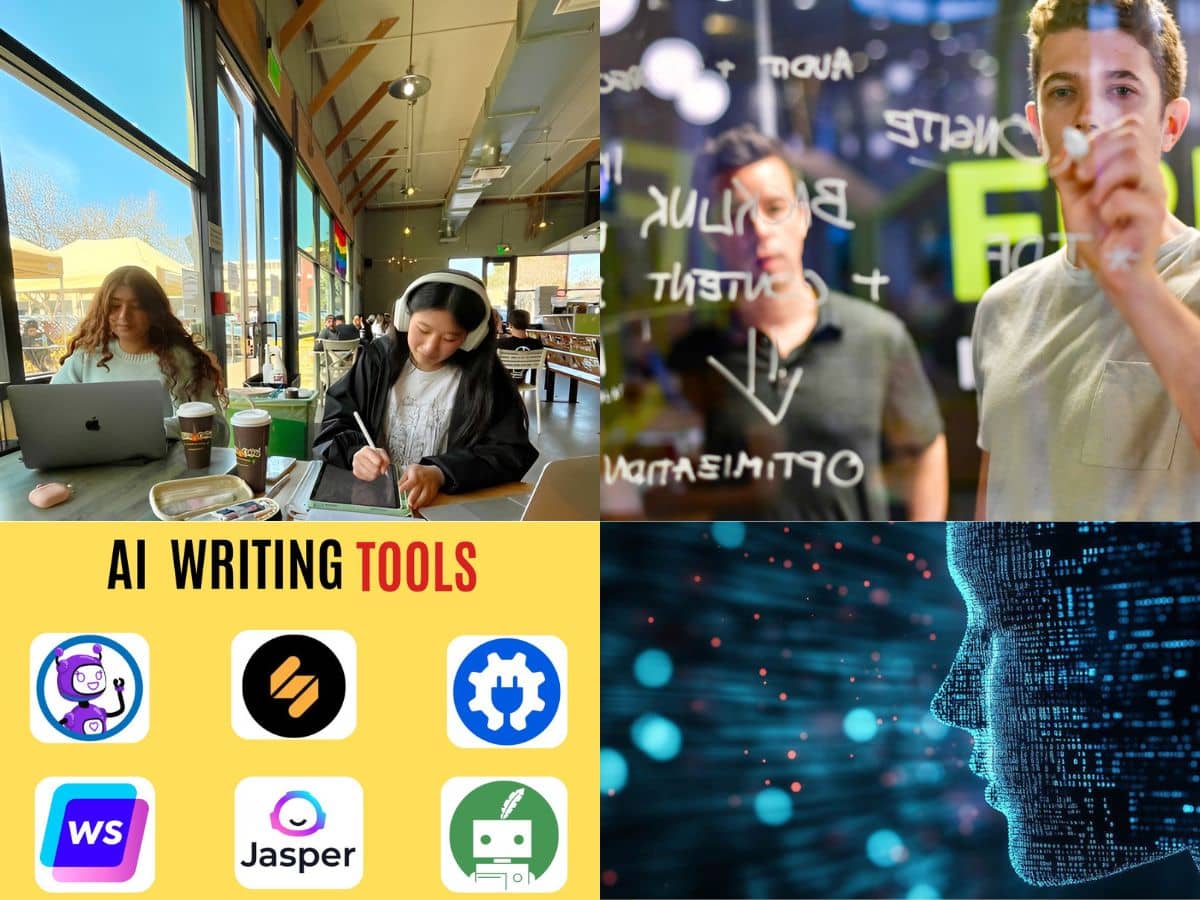
Can you spot AI vs human writing in your WFH workflow?
AI-powered tools are everywhere. These are utilized in every industry, from marketing, health care and every aspect of writing. They are popping up everywhere, awning brands and individuals, to generate content at a faster rate.
AI only needs a few keywords to be able to come up with a length article, thus heaven for writers who are pressed for time. But in the true essence of emotions and feelings, it is sorely lacking in it.
Let us tap a bit into the specific difference between AI writing and human work. With each specificity, you will be able to spot content generated by AI tools vs those created by the human mind. Aside from the discerning human mind, are there any others that can help you spot AI content? And what are the other benefits of including more human writing in your workflow?
Human Mind vs. AI
AI writing and the human mind are becoming closely linked, so tight that in worse case scenarios, it might be very difficult to spot which content is created by the human mind and which is not.
Online writing software like an AI-powered blog generator can help content writers generate articles at half the time. For repetitive and formulaic writing tasks, you can use AI-powered tools to learn deep algorithms and analyze vast amounts of text. This offers suggestions based on what the AI has learned.

But even with this exponential growth and optimistic outcomes from AI, a lot of brands are now beginning to realize the disadvantages of using these tools. When it comes to emotions, tackling the chaotic reactions of the human mind and expecting a more subjective and emotionally charged reaction, AI can be behind.
AI can summarize a research paper in a fraction of the time it will take you. And then here comes the writer’s woes. If you are to use AI, you have to discern how much authenticity you have to maintain. Use a lot of AI generated content, and the creativity goes down the drain.
In industries where speed is king, such as marketing and journalism, AI has proven how efficient and useful they can be. Even with a lot of these tools available for your indulgence, you might come across content that will have very similar sound, voice, and information as yours. That is perhaps the biggest disadvantage when prioritizing speed over creative content creation.
We are all for efficiency and anything that can make our load easier. But that should not undermine the quality and creativity score. Compared to AI, a writer will always be the best author when it comes to relaying human emotions in different scenarios. AI can just learn, but they cannot a hundred percent replace what the human mind and heart can say.
Instead of AI taking over content creation, writers can use it to their advantage without putting their own thoughts drown in the loopholes of a mechanical mind. With the proper approach, AI can be integrated into the writing workflow properly. It can handle mundane repetitive tasks, but leave the creative thinking and those that require a higher level of decision making to real writers.
Tools That Can Spot AI
Nowadays, it’s not as easy to spot AI content. You must have a very keen and discerning eye. But there are tools that you can use to detect the existence of AI in an article. You can even go up to what extent. These are AI-generated systems in themselves that can help you identify even texts that may have been refined by paraphrasing.
Here are some of our favorite AI detectors: Quillbot, Winston AI, Grammarly, GPT Zero, and. Some of these tools require a subscription, but there are some that you can use for free. For instance, you can use ZeroGPT; you can use this app free of charge for the first 150 thousand characters. After which, you have to pay for the app to continue with the service.

Integrating AI in human writing
With responsible use and the commitment to authenticity and creativity, it is possible for AI and the human mind to exist in harmony. You can use AI without it taking over your entire thoughts. It can help you handle workload, especially if it has been becoming too intense.
Responsible writers can use AI for mundane repetitive tasks, helping them free up space and time to explore their creativity further. You can use AI to suggest ideas whenever you feel stuck. It can be you ignite that light bulb when it gets a bit dim. But never rely on it for the entire creative journey.
Cognitive offloading is beneficial. You are freeing up mental space for more challenging and complex tasks. But when not done with caution, even critical thinking can be scraped off. A symbiotic relationship between AI and the human mind is possible. AI can handle the data gathering and let us leave the creative input, empathy, and higher decision making to the human mind.
Then there is a true danger that lies, one that may not be instantly recognized and seen by the naked eye. Using AI regularly and blatantly can result in a writer losing their critical thinking abilities. The mind weakens, and the creativity erodes. Recognising this danger early on can help you use AI tools in your daily workflow without it interfering with your critical thinking.