The 5 Best Ski Goggles for 2026 and Later Seasons
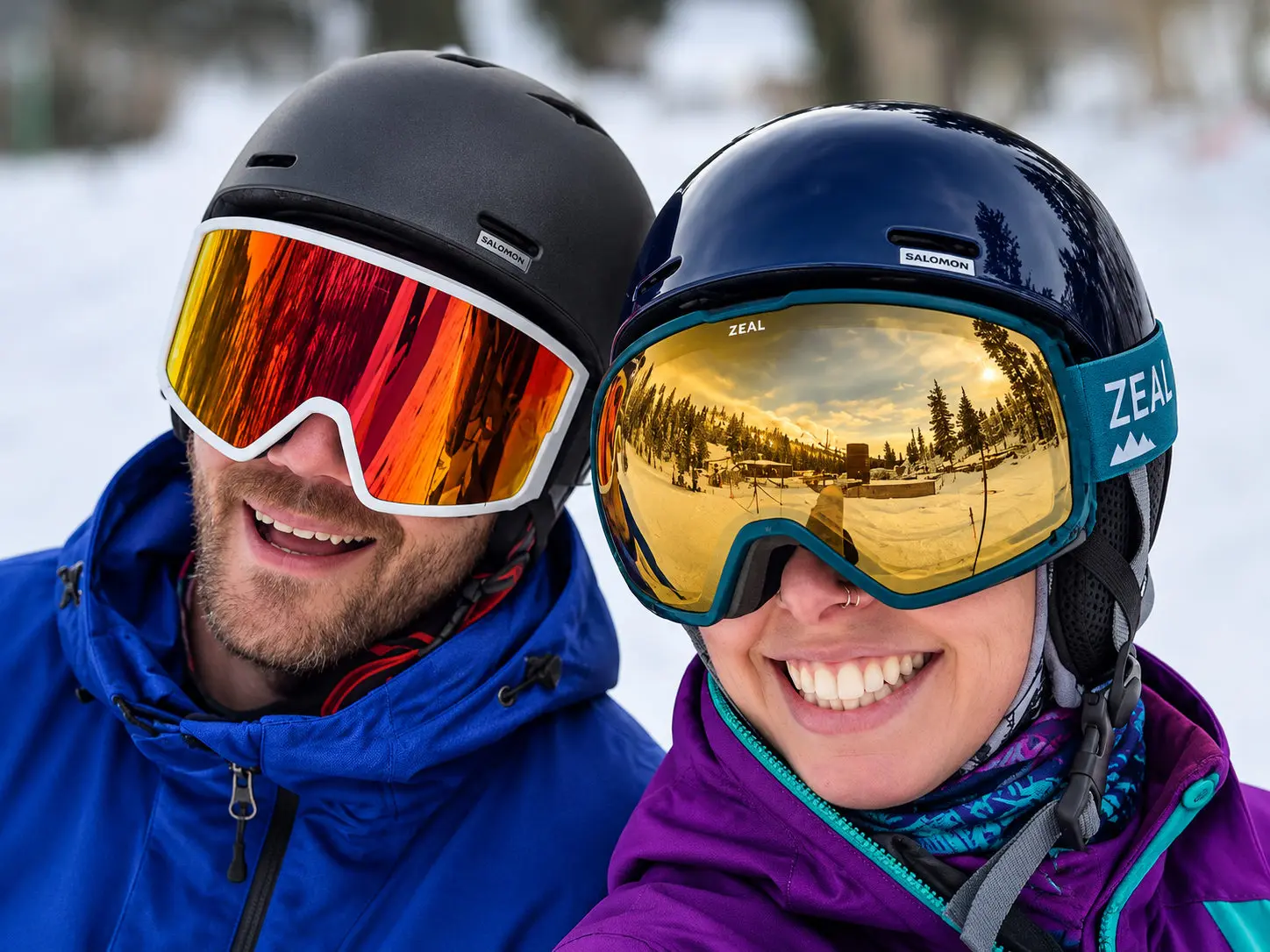
Your goggles are your window to the mountain. A great pair keeps wind, snow, and glare out of your eyes, stays clear when you’re working hard in a storm, and sharpens the bumps and ruts that disappear in flat light. A bad pair fogs on the first chairlift ride and sends you to the lodge early.
To find the goggles worth buying, we studied the latest test results from OutdoorGearLab, Treeline Review, and GearJunkie, whose testers log 50 to 100-plus days a season on everything from bluebird groomers to blizzards, along with picks from REI, SKI, and Gear Patrol. For budget goggles that the big outlets rarely test, we leaned on tens of thousands of owner reviews.
Our top pick: The Smith 4D MAG delivers the widest field of view we’ve seen, crisp ChromaPop optics, and one of the best magnetic lens-change systems on the market. If you want nearly the same optics in more sizes, the Smith I/O MAG is the goggle many testers still wear most. And if you’d rather never change a lens, the photochromic Glade Adapt 2 is one of the best values in skiing.
Our Top Picks
- Best Overall: Smith 4D MAG
- Best for Most Face Sizes: Smith I/O MAG
- Best Large-Frame Goggle: Oakley Flight Deck
- Best Photochromic Value: Glade Adapt 2
- Best Budget OTG Goggle: OutdoorMaster OTG
Ski Goggle Comparison Table
| Goggle | Award | Lens shape | Lenses included | Quick lens change | Frame sizes | Fits over glasses |
|---|---|---|---|---|---|---|
| Smith 4D MAG | Best Overall | Spherical with BirdsEye curve | 2 (bright + low light) | Yes, magnetic with locks | Standard, S, XL, low bridge | No |
| Smith I/O MAG | Best for Most Face Sizes | Spherical | 2 (bright + low light) | Yes, magnetic with locks | Standard, S, XL, low bridge | No |
| Oakley Flight Deck | Best Large-Frame Goggle | Spherical, rimless | 1 | Ridgelock (not magnetic) | M, L, low bridge | Yes, temple notches |
| Glade Adapt 2 | Best Photochromic Value | Cylindrical, frameless | 1 photochromic | Standard snap-in | Adapt 2, Adapt 2S, low bridge | Yes |
| OutdoorMaster OTG | Best Budget OTG Goggle | Dual-layer lens | 1 | No (fixed lens) | One size | Yes |
5 Best Ski Goggles for 2026
Smith 4D MAG
Lens shape: Spherical with BirdsEye Vision · Lens tech: ChromaPop · Lenses included: 2 (bright light + low light) · Lens change: Smith MAG magnetic system with dual locks · Sizes: Standard (medium), 4D MAG S, 4D MAG XL, low bridge · Fits over glasses: No
Bottom line: The widest view on the mountain, top-tier optics, and a secure magnetic lens swap make this the goggle to beat for skiers who want the best.
Look down at your boots while wearing most goggles and you’ll see the bottom of the frame. Look down in the 4D MAG and you’ll see your boots. That’s the trick behind Smith’s BirdsEye Vision lens, which curves inward along the bottom edge and, according to Smith, adds 25% more field of view than its I/O MAG. OutdoorGearLab named the 4D MAG its best overall ski goggle, with top marks for lens quality, comfort, and durability, and REI’s experts gave it their Editor’s Choice award. Treeline Review, which has put nearly six seasons and hundreds of ski days into its test pair, says it has the best field of view of the roughly 20 goggles its team has tried.
The extra downward view sounds like a gimmick until you use it. OutdoorGearLab’s tester found it made it easier to find a jacket zipper, adjust a child’s helmet buckle, or check his phone without craning his neck, and it’s a genuine advantage when you’re picking a line through steep, technical terrain. Smith’s ChromaPop lenses add rich contrast that helps bumps and ruts stand out, and the included low-light lens earned praise from Treeline for adding definition when everything turns white.
Swapping lenses is quick and secure. Eight magnetic contact points pull the lens into place, and two small levers built into the frame lock it down, so it won’t pop off in a crash. Smith ships the 4D MAG with a hard case and a microfiber bag with a spare-lens sleeve, which Treeline credits for keeping its well-used pair looking nearly new. Three-layer DriWix foam and an ultra-wide, silicone-backed strap round out a comfortable, helmet-friendly fit, and Smith backs it with a limited lifetime warranty.
Nothing is perfect. OutdoorGearLab noticed some distortion at the very bottom of the curved lens, and ventilation scored a step below its top marks. Treeline saw occasional light fogging with a neck gaiter pulled over the nose in storms, and GearJunkie’s testers found the I/O MAG resisted fog a little better in nasty weather. It’s also one of the most expensive goggles you can buy.
Smith I/O MAG
Lens shape: Spherical · Lens tech: ChromaPop · Lenses included: 2 (bright light + low light) · Lens change: Smith MAG magnetic system with dual release levers · Sizes: I/O MAG S, I/O MAG (medium), I/O MAG XL, low bridge · Fits over glasses: No
Bottom line: A modern classic with nearly the same optics as the 4D MAG, better fog resistance in foul weather, and the widest size range we found.
Ask three of the most respected gear testers which goggle they’d recommend to most skiers and you’ll hear the same answer. GearJunkie, Treeline Review, and Switchback Travel all name the I/O MAG their best overall ski goggle. GearJunkie rated its lens quality 9.5 out of 10, while OutdoorGearLab described it as a modern classic that fits many faces, doesn’t fog, and is a master of clarity.
Why pick it over the 4D MAG? Fit is the big reason. The I/O MAG comes in more sizes than any goggle Treeline considered, from a small frame for petite and women’s faces to an XL, plus a low-bridge version for faces with a lower nose bridge or high cheekbones. That makes it far easier to find a pair that seals well against your face and helmet.
It also handles bad weather especially well. GearJunkie’s testers wore it through blizzards at Vail and changing light at Crested Butte and Telluride, and found its fog prevention outperformed even the 4D MAG when conditions turned sour. The spherical lens curves both side to side and top to bottom for a wide, distortion-free view, and ChromaPop optics sharpen contrast across bright sun and flat light. Seven magnets around the rim and two mechanical release levers hold the lens firmly yet let you swap it in seconds; GearJunkie recommends the Storm Rose Flash lens, with 50% visible light transmission, as a strong low-light option.
A few nitpicks: GearJunkie found the frame slightly rigid, the rear strap buckle can unclip when you adjust it on the fly, and the outer lens coating smudges and scuffs if you’re careless during swaps. OutdoorGearLab also pointed out that it doesn’t come with a hard case.
Who it’s for: Skiers who want premium optics and fast lens changes, especially if standard goggles never seem to fit their face.
Oakley Flight Deck
Lens shape: Spherical, rimless · Lens tech: Prizm with Plutonite lens material · Lenses included: 1 · Lens change: Ridgelock sub-frame system · Sizes: Flight Deck M, Flight Deck L, low bridge · Fits over glasses: Yes, via temple notches
Inspired by the visors on fighter pilots’ helmets, the Flight Deck has been one of skiing’s most recognizable goggles for years, and its huge, rimless lens still delivers one of the biggest fields of view on the market. Treeline Review names the Flight Deck L its best large-frame ski goggle, and OutdoorGearLab gave the Flight Deck M a top score for lens quality, praising its optical quality, wide view, and comfort.
Much of that performance comes from Oakley’s Prizm lens tech, which Treeline rates nearly on par with Smith’s ChromaPop. Prizm uses specially tuned dyes to boost contrast, and on bright days OutdoorGearLab’s testers found it helped them spot the best snow. The dual-pane lens has Oakley’s F3 anti-fog coating, a flexible O Matter frame stays comfortable in deep cold, and triple-layer foam with a fleece lining seals against the face.
The Flight Deck also has a hidden talent for glasses wearers. Small notches at the temples make room for most prescription frames, and Treeline notes the oversized lens effectively works as an over-the-glasses goggle. Durability is a strong suit, too: Treeline reports that Tahoe-area ski patrollers and search-and-rescue members who ski more than 100 days a season recommend it.
Where does it fall short? Lens changes. The Ridgelock system isn’t a quick magnetic swap, and OutdoorGearLab scored it well below the Smith goggles for ease of changing lenses. Most versions also ship with just one lens, so you’ll want to choose a tint that matches where you usually ski, or buy a low-light lens separately. OutdoorGearLab found low-light performance a step behind the best goggles with dedicated storm lenses.
Glade Adapt 2
| Spec | Glade Adapt 2 |
|---|---|
| Lens shape | Cylindrical, frameless |
| Lens tech | REVEAL photochromic (REVEAL 4K contrast-enhancing options) |
| VLT range | About 16% to 61%, depending on light |
| Lenses included | 1 |
| Sizes | Adapt 2 (medium/large), Adapt 2S (small), low-bridge versions |
| Fits over glasses | Yes |
If you hate swapping lenses on a cold chairlift, the Adapt 2 is built for you. Its REVEAL photochromic lens automatically darkens in bright sun and lightens when clouds roll in, covering roughly 61% to 16% visible light transmission, so a single lens handles most days from storm to bluebird. OutdoorGearLab named it the best midrange value in its test, praising its excellent optical quality and superb ventilation, and Gear Patrol picked it as the best budget snow goggle. One SKI magazine tester liked the smaller Adapt 2S so much that it was the only goggle they packed for a ski-touring trip to Norway.
In OutdoorGearLab’s testing, the lens transitioned quickly to the right tint and enhanced both color and snow contrast. Fog was a non-issue; one tester reported none at all, even on tough uphill climbs, and Glade backs the goggle with a fog-free guarantee. Better Trail found the frameless design gave a field of view close to the Smith I/O MAG’s, and the goggle paired well with helmets for balanced airflow. Glade, a Colorado-based brand that sells mostly direct to consumers, also offers the Adapt 2 in a smaller Adapt 2S and low-bridge fits.
The main compromise shows up in very flat light. OutdoorGearLab found the photochromic lens couldn’t quite match a dedicated, high-quality low-light lens for picking out fine snow-surface detail when the clouds settle in. Glade sells a separate low-light lens for those days, but swapping it uses a traditional snap-in system rather than magnets.
For skiers who want one goggle that just works, this is the smartest value on the list.
OutdoorMaster OTG
Lens: Dual-layer, anti-fog coated, fixed (not interchangeable) · VLT options: About 30 tints, from 8% for bright sun to 99% for night skiing · Frame: Bendable TPU with triple-layer foam · Fits over glasses: Yes · Protection: 100% UV400
The big test outlets rarely review goggles at this price, so for the OutdoorMaster OTG we turned to the people who actually wear them. It’s one of Amazon’s best-selling ski goggles and holds a 4.6-out-of-5 average from more than 22,000 ratings, making it one of the most-reviewed goggles on the market.
Its popularity comes down to fit. The frame has extra internal room for glasses, and OutdoorMaster says it accommodates eyewear up to about 5.3 by 1.65 inches. An extra-long elastic strap stretches over virtually any helmet, and the soft, bendable TPU frame and triple-layer foam stay comfortable for adults and teens alike. The dual-layer lens traps an insulating air gap, and its anti-fog inner coating is the feature owners mention most often. Because you can choose from roughly 30 lens tints, it’s easy to pick one that matches your local light, or to grab a dark and a light pair for less than many premium goggles cost.
The low price comes with real limits. The lens is fixed, so there’s no swapping for storm days, and you won’t get contrast-enhancing optics like ChromaPop or Prizm. Some owners also report that the lens scratches more easily than premium models, so store it in the included pouch. As OutdoorGearLab notes, entry-level goggles in general make the most sense for fair-weather skiers who get out fewer than 10 days a season.
Best for: Beginners, kids and teens, occasional skiers, glasses wearers on a budget, or anyone who wants a backup pair in the car.
How We Chose the Best Ski Goggles
We didn’t run our own on-snow tests for this guide. Instead, we built it from the most thorough testing available:
- OutdoorGearLab (updated March 2026) bought and tested 16 goggles side by side, scoring each on lens quality, comfort, ventilation, ease of changing lenses, durability, and style.
- Treeline Review (updated February 2026) has tested goggles over five-plus seasons at Tahoe, Breckenridge, and Mammoth, with testers who ski 50-plus days a year.
- GearJunkie (updated August 2026) rated goggles on lens quality, lens-swap system, fit, and fog resistance, with one editor testing five pairs across 63 days in a single season.
We also weighed picks from REI, Switchback Travel, SKI, Gear Patrol, and Better Trail, and for budget models that the big outlets don’t test, we relied on large pools of verified owner reviews. Finally, we confirmed every goggle’s lens shape, sizes, lens system, and VLT on manufacturer and retailer pages in November 2026.
How to Choose Ski Goggles
Lens tint and VLT
Visible light transmission (VLT) is the percentage of light a lens lets through. The lower the number, the darker the lens. Choosing the right VLT for your usual conditions matters more than almost any other feature.
| Conditions | Typical VLT | Common lens colors |
|---|---|---|
| Bright sun, bluebird days | 5% to 20% | Black, dark gray, platinum or other mirrored lenses |
| Partly cloudy, mixed light | 15% to 30% | Blue, green, medium red, rose gold |
| Overcast, storm, flat light | 30% to 60% | Yellow, amber, rose, light red |
| Night skiing | 60% to 90%+ | Clear or very light yellow |
Most premium goggles, like the Smith 4D MAG and I/O MAG, include a bright-light lens and a low-light lens so you’re covered either way. If you ski in fast-changing weather and hate swapping, a photochromic lens like the Glade Adapt 2’s darkens and lightens automatically.
Contrast-enhancing lenses
Brand-specific lens tech such as Smith’s ChromaPop and Oakley’s Prizm filters specific wavelengths of light to boost contrast, so bumps, ruts, and ice stand out in flat light. Testers consistently find these lenses make a noticeable difference for frequent skiers, while basic budget lenses offer UV protection without the extra definition.
Lens shape
- Spherical lenses curve both horizontally and vertically, like the Smith and Oakley picks here. They offer the widest field of view and the least distortion.
- Cylindrical lenses curve side to side but are flat top to bottom. They’re often more affordable and have a classic look, though the view is a little narrower.
- Toric lenses blend the two, aiming for spherical-like clarity with a sleeker profile.
Lens-change systems
Magnetic systems, like Smith’s MAG, let you swap lenses on the chairlift in seconds, and the best add mechanical locks so a lens can’t pop out in a fall. Traditional snap-in lenses work fine but are fiddly with gloves on, so most skiers only swap them at home or in the lodge.
Fit and helmet compatibility
The right goggle seals evenly around your face without pressure points and sits flush with your helmet, with no gap across the forehead. Many models come in small, standard, and large or XL sizes, plus low-bridge fits for faces with a lower nose bridge or high cheekbones. Always try goggles on with your own helmet if you can, and remember that pairing a goggle and helmet from the same brand often gives the best fit and venting.
Over-the-glasses (OTG) fit
If you wear glasses, look for goggles labeled OTG, which have extra interior room and foam cutouts for eyeglass arms. The Oakley Flight Deck, Glade Adapt 2, and OutdoorMaster OTG all accommodate most frames. Frequent skiers who wear glasses may also want to look into prescription inserts or contacts for a cleaner seal and less fogging.
Fog resistance and ventilation
Dual-pane lenses with an anti-fog inner coating, foam-covered vents, and a good helmet seal all help keep goggles clear. No goggle is completely fog-proof, especially if you pull a neck gaiter over your nose, but premium models clear faster and fog less often than budget pairs.
Ski Goggle Care and Maintenance
- Never wipe the inside of a wet lens. It can strip the anti-fog coating. Shake out snow and let the lens air-dry instead.
- Clean the outside with microfiber only. Use the goggle bag, not paper towels or a shirt.
- Store goggles in a bag or hard case. It’s the easiest way to prevent scratches, especially for spare lenses.
- Dry goggles at room temperature overnight. Avoid direct heat, such as a car dashboard or heater, which can damage the frame and foam.
Ski Goggle FAQ
Are expensive ski goggles worth it?
For frequent skiers, usually yes. Premium goggles offer contrast-enhancing optics, a second low-light lens, quick lens changes, and better fog resistance, all of which make a real difference in flat light and storms. If you ski only a few sunny days a year, a budget goggle with the right tint will protect your eyes just fine.
What VLT lens is best for all conditions?
If you can only have one lens, choose something in the 20% to 35% range, or a photochromic lens that adjusts automatically. Better still, choose a goggle that includes a second low-light lens.
Can I wear ski goggles over glasses?
Yes, as long as you choose an OTG goggle with enough interior room and foam cutouts for your frames. Standard goggles often press glasses against your nose or fog up quickly.
How do I stop my ski goggles from fogging?
Keep your goggles on your face or helmet rather than your forehead, where they trap warm air. Don’t tuck a gaiter or face mask under the goggle foam, keep vents clear of snow, and never wipe the inside of a wet lens.
How often should I replace ski goggles?
Most skiers replace goggles every two to five seasons. Scratched or delaminating lenses, crumbling foam, or a stretched-out strap are signs it’s time for a new pair or, on many premium models, a replacement lens.
The Bottom Line
For the best view and optics on the mountain, the Smith 4D MAG is our top pick. The Smith I/O MAG delivers nearly the same performance in more sizes, the Oakley Flight Deck suits larger faces and glasses wearers who want a massive field of view, and the photochromic Glade Adapt 2 is a brilliant value if you never want to change lenses. For beginners, kids, or a backup pair, the OutdoorMaster OTG gets the basics right.