Pack Better: The Best Travel Backpacks for Women in 2026
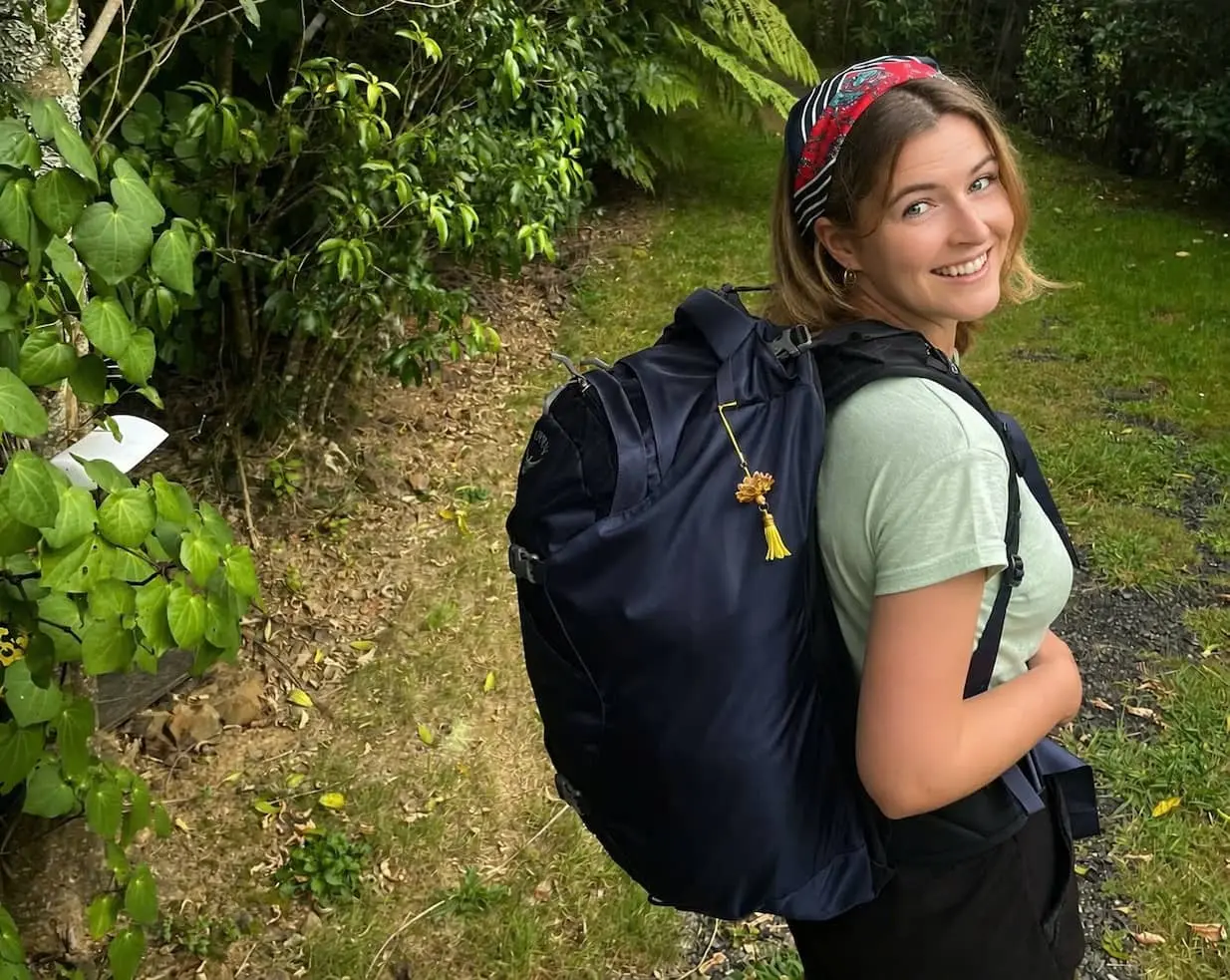
A good travel backpack for women should do more than hold enough clothes for a trip. Once a bag reaches 30 or 40 liters, the way it carries that weight….and whether the harness actually fits your torso, can matter as much as the amount of space inside.
For most travelers, we’d start with the Osprey Fairview 40. Its women-specific suspension, adjustable torso length, and 40-liter capacity make it unusually well suited to travelers who want to pack for several days without giving up the support of a proper backpacking harness. But smaller and more structured alternatives may make more sense if you travel light, carry a laptop often, or simply dislike wearing a large pack.
Carry-On Ready: The Best Travel Backpacks for Women
Osprey Fairview 40
- Lightweight & Durable
- Adjustable torso fit
- Compatible with Farpoint/Fairview Daypack and is a domestic carry-on size
- Item Dimensions: 21.7H x 13.8W x 9.1D in; Item Weight: 3.41lb

The Osprey Fairview 40 is the best choice here for most women because it combines carry-on-friendly proportions with a genuinely supportive, women-specific suspension system. Unlike many travel bags that simply attach padded straps to a suitcase-shaped body, the Fairview uses Osprey’s LightWire frame, an AirScape back panel, load-transferring hipbelt, and an adjustable torso system. That combination should matter most when the bag is fully packed and you have a long walk between a train station, airport, or hotel.
The fit is its biggest advantage. Osprey specifically shapes the Fairview around a women’s fit, and the torso length can be adjusted rather than forcing everyone into one fixed back length. The shoulder harness and hipbelt can also be zipped completely behind a protective panel, which keeps loose straps from catching when the bag is placed in an overhead bin or checked unexpectedly.
Packing is comparatively simple. A large front panel exposes most of the 40-liter main compartment, two internal compression straps keep clothing from shifting, and a dedicated sleeve fits most laptops up to 16 inches. At 21.7 by 13.8 by 9.1 inches, Osprey lists the Fairview as meeting domestic carry-on requirements; it weighs 3.23 pounds.
It is not the lightest bag in this guide, and travelers who mainly move from airport to taxi to hotel may not need such an elaborate suspension system. But if you expect to actually walk with your luggage, the Fairview’s frame, hipbelt, adjustable fit, and ventilation are more meaningful than another organizer pocket.
Cotopaxi Allpa 35L / 42L

|

|
|
$225.00
|
$254.95
|
If organization matters more to you than a traditional backpacking feel, the Cotopaxi Allpa is easier to live out of than most conventional backpacks. Its full-wrap zipper opens the main compartment much like a suitcase, so shirts, pants, toiletries, and smaller packing cubes can be reached without digging downward through one large cavity.
For most women, we prefer the 35L version. Cotopaxi’s current 35L design adds air-mesh shoulder straps, improved weight distribution, a stretch bottle pocket, a luggage pass-through, and a padded sleeve for a 15-inch laptop. Cotopaxi lists the Del Día version at 22 by 12 by 10 inches and 2 pounds 7 ounces and describes it as carry-on compatible. The 10-inch depth is still worth checking against your particular airline’s limits rather than assuming every carrier will accept it.
The 42L is for people who consistently run out of room in a 35-liter bag. The current version retains the suitcase-style opening, internal divided storage, water-bottle pocket, padded 15-inch laptop sleeve, tuckable straps and hipbelt, and a design intended to transfer some weight to the hips. But at 22 by 14 by 11 inches, it is noticeably bulkier and less of a sure bet for strict carry-on limits. If your goal is one-bag air travel, we’d take the 35L; if you routinely pack bulkier clothes or need the extra seven liters, the 42L is the more forgiving choice.
REI Co-op Ruckpack 40 Pack
This is closer to a hiking pack that learned how to travel than a suitcase with backpack straps. That distinction is useful if your trip includes long walks, hostels, trails, or destinations where rolling luggage is inconvenient.
REI gives the women’s model a shorter torso range and different shoulder-strap and hipbelt shaping than the men’s version. It fits torso lengths from 16 to 18 inches, and REI also sells an extended 1X–4X size with longer and more widely spaced shoulder straps plus an extended hipbelt. A spring-steel perimeter frame, padded hipbelt, load lifters, foam back panel, and air-mesh ventilation help keep a full 40-liter load close to the body.
The travel details are surprisingly thorough. The harness can be covered for transit, the main compartment opens with a full-length zipper, and the pack includes several internal pockets, two bottle pockets, lockable zippers, grab handles, a 15-inch laptop/hydration sleeve, and even a stowable raincover.
There is one substantial catch: it is big. At 23 by 15 by 9.5 inches and 2 pounds 11 ounces, the Ruckpack is less airline-friendly than the Fairview 40 and should not be treated as a guaranteed carry-on on strict carriers. Choose it when carrying comfort and outdoor versatility matter more than maximizing your chances of passing every airline sizer.
Tom Bihn Synapse 19
At only 19 liters, the Tom Bihn Synapse 19 looks almost out of place beside 30- and 40-liter travel packs. That is precisely why we like it for travelers who have learned to pack very little. Tom Bihn lists it at 16 by 11.4 by 7.9 inches and says it fits under an airplane seat and meets the personal-item requirements of most major airlines. Depending on fabric, it weighs roughly 1.5 to 1.7 pounds.
The Synapse is organized from the outside in. Five exterior pockets provide dedicated places for smaller items, and the water-bottle pocket sits centrally rather than hanging off one side of the pack, which helps keep that heavier item near the middle. Inside, attachment loops and O-rings allow smaller accessories to be secured rather than collecting at the bottom. Its edgeless padded shoulder straps are also designed to accommodate a broad range of users.
But minimalists should understand what they are giving up. The main compartment opens only partway rather than clamshell-style, and there is no built-in padded laptop compartment; Tom Bihn instead provides Cache attachment loops for carrying a compatible 13-inch laptop sleeve. This is not the bag for someone trying to squeeze an extra pair of shoes into a week-long packing list. For an overnight trip, a light weekend, or travel where you want your entire bag under the seat in front of you, however, its compactness becomes an advantage rather than a limitation.
How to Choose a Travel Backpack for Women
Start with your torso, not your height….or the word “women’s” on the tag. Torso length and hip size are the measurements that determine whether a loaded backpack sits where it should. A women-specific design can be a useful starting point: Osprey, for example, uses a shorter torso range, narrower shoulder width, differently shaped harness, and women-specific hipbelt on its women’s-fit packs. But bodies vary, so a well-fitting unisex pack can still be more comfortable than a women’s model in the wrong size.
Pay particular attention to the shoulder straps and hipbelt. The shoulder straps should follow your shoulders without leaving a gap or digging around the collarbone, and an adjustable sternum strap should sit where it feels comfortable rather than pressing across the chest. The hipbelt matters even more once you start carrying 30 or 40 liters: positioned over the hip bones, it can transfer much of the load away from your shoulders and arms. If a pack still hangs heavily from your shoulders after you adjust it, a different torso size or harness shape is probably a better solution than adding more padding.
Don’t automatically buy the largest bag you can carry on. A 40-liter backpack gives you more room, but it also becomes wider, deeper, and heavier once packed. If you have a shorter torso or simply prefer a less cumbersome bag, a well-organized 30- to 35-liter model may be easier to manage on stairs, trains, and long airport walks. And regardless of the advertised capacity, check the actual dimensions against your airline’s rules; liters tell you how much a bag holds, not whether it will fit in the overhead bin.
Finally….try the bag with some weight in it whenever possible. An empty backpack can feel comfortable even when the fit is wrong. Load it roughly as you would for a trip, tighten the hipbelt first, then the shoulder straps and load lifters, and walk around for a few minutes. The right pack should stay close to your back and feel stable without making you constantly readjust the straps.
Our last advice!
For most women, the Osprey Fairview 40 offers the strongest balance of fit, capacity, and carrying support. The Cotopaxi Allpa 35L is the better choice if you want suitcase-like organization, while the Patagonia Mini MLC 30L keeps things smaller and more versatile. The REI Ruckpack 40 makes more sense when your trip extends beyond airports and hotels, and the Tom Bihn Synapse 19 is the pick for travelers who would rather pack less than carry more.