The best dehumidifiers for every type of damp space
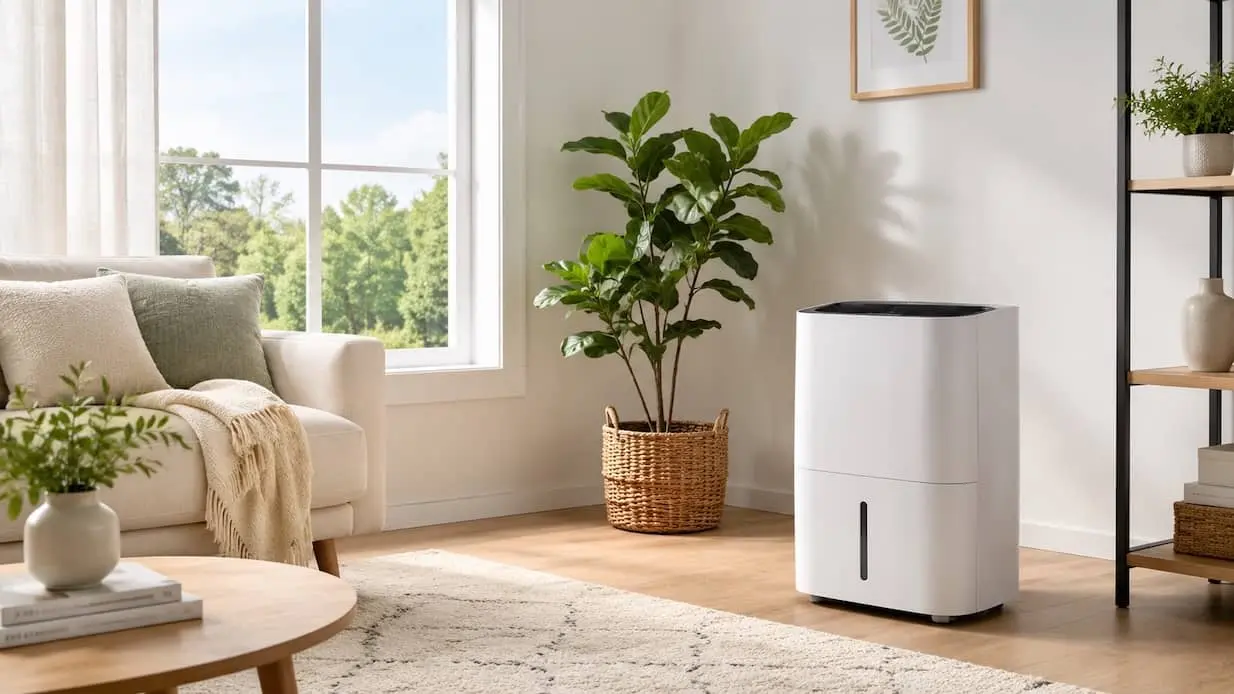
Brands use the word dehumidifier for everything from tiny countertop units to full-size compressor machines. They are not interchangeable. A device that keeps a closet fresh will do very little for a wet basement.
For this shortlist, I matched every claim to the exact model. These five options are worth considering — but only in the right space.
Our Top Picks for 2026
Midea Cube
|
Midea Cube 20 Pint

|
Midea Cube 35 Pint

|
Midea Cube 50 Pint
|
|
$179.91
|
$219.97
|
$248.01
|
This is the easiest recommendation here because its unusual shape fixes one of the most annoying things about owning a dehumidifier: the constant trips to empty a small bucket.
Midea uses the tank as the lower half of the machine. The Cube expands while running and nests inside the bucket for storage. RTINGS measured the reservoir at 4.2 gallons, several times larger than a conventional tank.
In RTINGS’ test, the 35-pint Cube delivered 21 pints per day, drew 393 watts and moved 189 CFM at its highest setting. It reached 52.2 dBA, so you will hear it in a quiet bedroom, but it should fade behind a television or normal conversation.
The included hose provides continuous gravity drainage, while the separable design makes positioning the unit above a floor drain easier. There is no pump, so it cannot send water uphill. Wi-Fi is included, but the tank and hose are the features that matter most.
The downside is weight. Four gallons of water is heavy, and removing the upper unit also requires some strength. Set a lower fill limit or use the hose if carrying the tank would be difficult.
This is my pick for medium-sized basements and living areas. For a very wet or open basement, move up to a 50-pint machine.
Frigidaire FHDD5034Y1

The Frigidaire FHDD5034Y1 keeps the familiar upright design, with a front tank and controls exactly where you expect them.
This current model is rated for 50 pints per day. Frigidaire lists a 2.01 L/kWh integrated energy factor, 470-watt draw and noise ratings of 47–51 dBA across three speeds. These are manufacturer figures, but they make the machine look more efficient than many older 50-pint units. It is ENERGY STAR certified and uses R-32 refrigerant.
The 2.7-gallon bucket is generous without becoming as unwieldy as the Midea’s. You also get caster wheels, a digital humidistat, a 24-hour timer and continuous gravity drainage. The app supports schedules, Alexa and Google Home, but there is no pump and the warranty lasts only one year.
Choose it for a large, consistently damp basement with a low drain nearby. It is a capable 50-pint workhorse, but I would not pay extra solely for the app.
Eva-Dry EDV-1100

The Eva-Dry EDV-1100 is not a substitute for a compressor dehumidifier. Its thermoelectric system is rated for about eight ounces per day under hot, humid conditions, and the tank holds 16 ounces. In an independent 50-square-foot test, it did not lower humidity from 80% to 75% any faster than natural moisture decay.
What you get is a simple 22-watt device with automatic shutoff. Despite Eva-Dry’s 1,100-cubic-foot claim, I would reserve it for a closet, cabinet or RV compartment with mild dampness. If you can feel the humidity in a room, buy a full-size machine.
Ivation 13-Pint IVADDH06
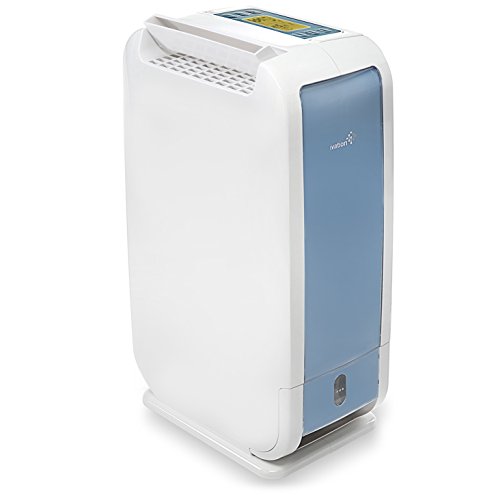
Most small dehumidifiers are weak thermoelectric boxes. The Ivation uses a desiccant rotor that keeps collecting moisture when temperatures fall and compressor models lose performance.
Ivation rates it for 13 pints per day at 68°F and 60% relative humidity in spaces up to 270 square feet. In HouseFresh’s grow-tent test, it lowered humidity from 93% to 34% in 30 minutes. They measured 53.5 dBA and 459.87 watts at top speed.
Controls include low, high and sleep modes, a humidistat, dimmable display and swinging warm-air outlet. The 3.8-pint tank is removable, and a hose connection allows continuous gravity drainage.
Cold-weather performance comes at a price. Ivation lists 470 watts on high and 280 watts on low — a lot for a 13-pint unit. It also exhausts warm air.
For an unheated laundry room, small garage or cold storage area, this is the smallest model here that can tackle meaningful moisture. In a warm basement, the Midea or Frigidaire will remove more water per unit of electricity.
Things to keep in mind when buying a dehumidifier
Start with pints per day, not the advertised square footage
Ignore unusually large coverage claims and focus on capacity. ENERGY STAR recommends roughly 20–30 pints per day for a small-to-medium space that feels slightly or moderately damp, increasing to 25–40 pints when it is very damp. Size up for an open basement or visible moisture.
Match the technology to the temperature
Compressor models offer the best balance of output and energy use in most heated homes. A desiccant unit such as the Ivation suits colder spaces but consumes more electricity and releases warm air. Thermoelectric models such as the Eva-Dry belong in closets and cabinets, not damp rooms.
Decide where the water will go before you buy
A large bucket means fewer trips to the sink but more weight. Gravity drainage is ideal when a floor drain sits below the hose outlet. None of these exact models can pump water into an elevated sink, so choose a pump-equipped version when gravity drainage is impossible.
Do not compare an old “70-pint” label directly with a new 50-pint model
The U.S. test procedure changed in 2020 to use cooler, more realistic conditions. Many machines therefore received lower capacity numbers without becoming less powerful. ENERGY STAR explains the change here. Compare only ratings produced under the same standard.
Put energy use, noise and warranty ahead of the app
Look for ENERGY STAR certification and a higher integrated energy factor in L/kWh. Check noise at the speed you will actually use. Wi-Fi is convenient, but a dependable humidistat, continuous drainage and a useful warranty will matter more after the novelty wears off.
A dehumidifier manages moisture; it does not repair the source. Fix leaks and poor ventilation first. Start around 50% relative humidity, lowering the setting only if condensation or musty odors remain.
Wrapping up
For most homes, I would start with the Midea Cube. Its 35-pint capacity, huge tank and flexible gravity drainage make it easy to live with. Choose the Frigidaire for a larger or wetter basement. Consider the Hisense only when it is heavily discounted and properly covered by a warranty.
The Ivation suits a cold, compact room where a compressor struggles; the Eva-Dry belongs in a closet, cabinet or RV compartment. Buying the correct type matters more than choosing the largest square-footage claim.