5 Best Budget and Cheap Action Cameras in 2026
Buying a budget action camera used to mean accepting shaky footage, fuzzy details, and a waterproof case that felt more valuable than the camera inside it. Things have changed. Even affordable models can now record in 4K, stabilize movement, and provide a front screen for vlogging.
Still, that 4K badge does not tell the whole story. A camera limited to 4K/30fps behaves very differently from one capable of 4K/120fps, while “waterproof” may refer either to the camera body or an included housing. We compared five options across several price levels, looking closely at video modes, stabilization, battery life, durability, and ease of use.
Prices below are manufacturer-listed US prices checked in July 2026 and may change.
| Camera | Best for | Listed price |
|---|---|---|
| DJI Osmo Action 4 | Best overall value | $239 |
| AKASO Brave 7 LE | Best affordable vlogging camera | $139.99 |
| AKASO Brave 4 Pro | Best low-cost option | $109.99 |
| DJI Osmo Action 5 Pro | Best premium value | $319 |
| GoPro HERO | Best compact action camera | $199.99 MSRP |
Our Recommendations for Action Camera That Won’t Break The Bank
DJI Osmo Action 4
- Superior Low-Light Performance with 1/1.3-inch Sensor
- Pro-Grade Color Science
- Cold-Resistant, Long-Lasting Battery
- Smooth Footage, Every Time

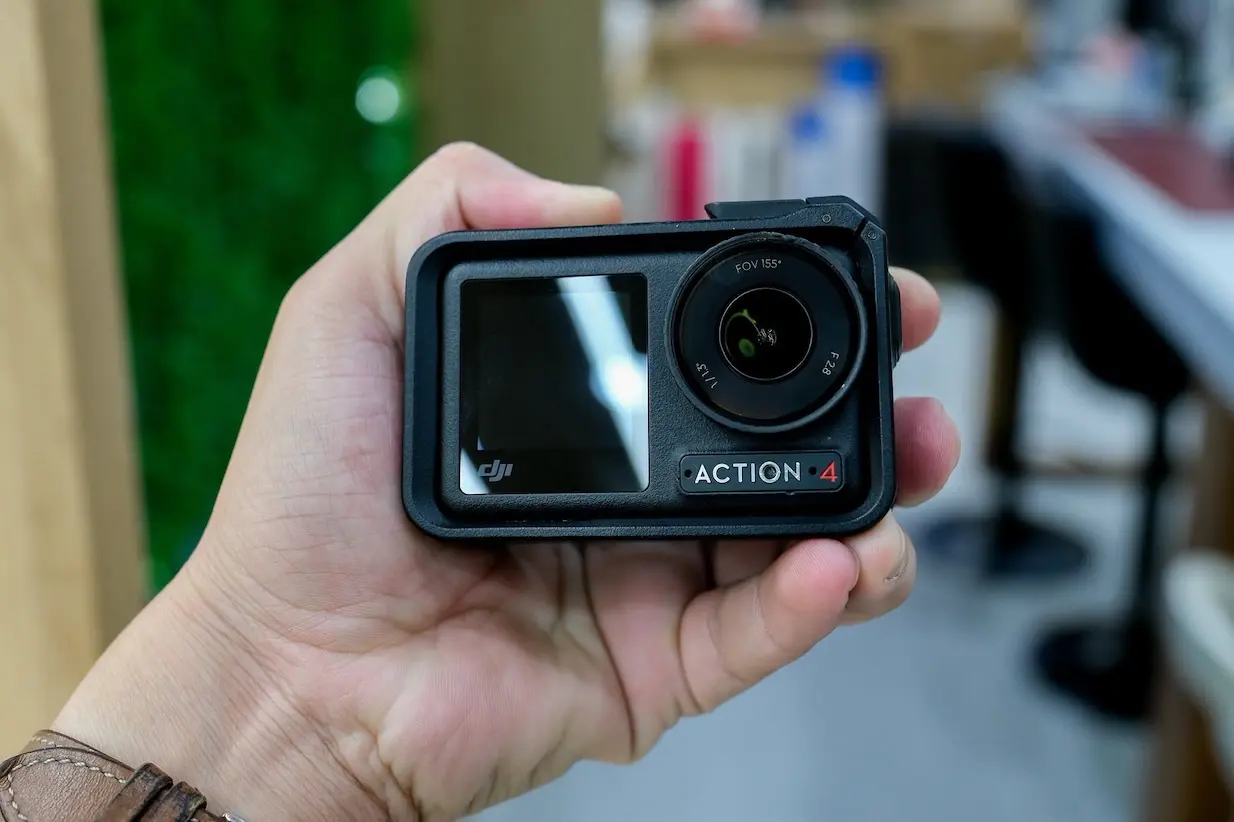
Last-generation flagships are often where budget gold is hiding, and the Osmo Action 4 is an excellent example. Its 1/1.3-inch sensor uses an equivalent pixel size of 2.4μm, giving the camera more room to work with shadows and evening scenes than a basic entry-level model. It can record 4K footage at up to 120fps, cover a wide 155-degree field of view, and capture 10-bit D-Log M video for anyone who wants more flexibility during color grading.
RockSteady 3.0 handles ordinary camera shake, while HorizonSteady can correct a full 360 degrees of rotation. There is a catch: HorizonSteady is limited to 2.7K at 60fps or below, although HorizonBalancing remains available at up to 4K/60fps. The 145g body is waterproof to 18 meters without a housing, making this one of the least complicated cameras here for swimming, kayaking, or rainy rides.
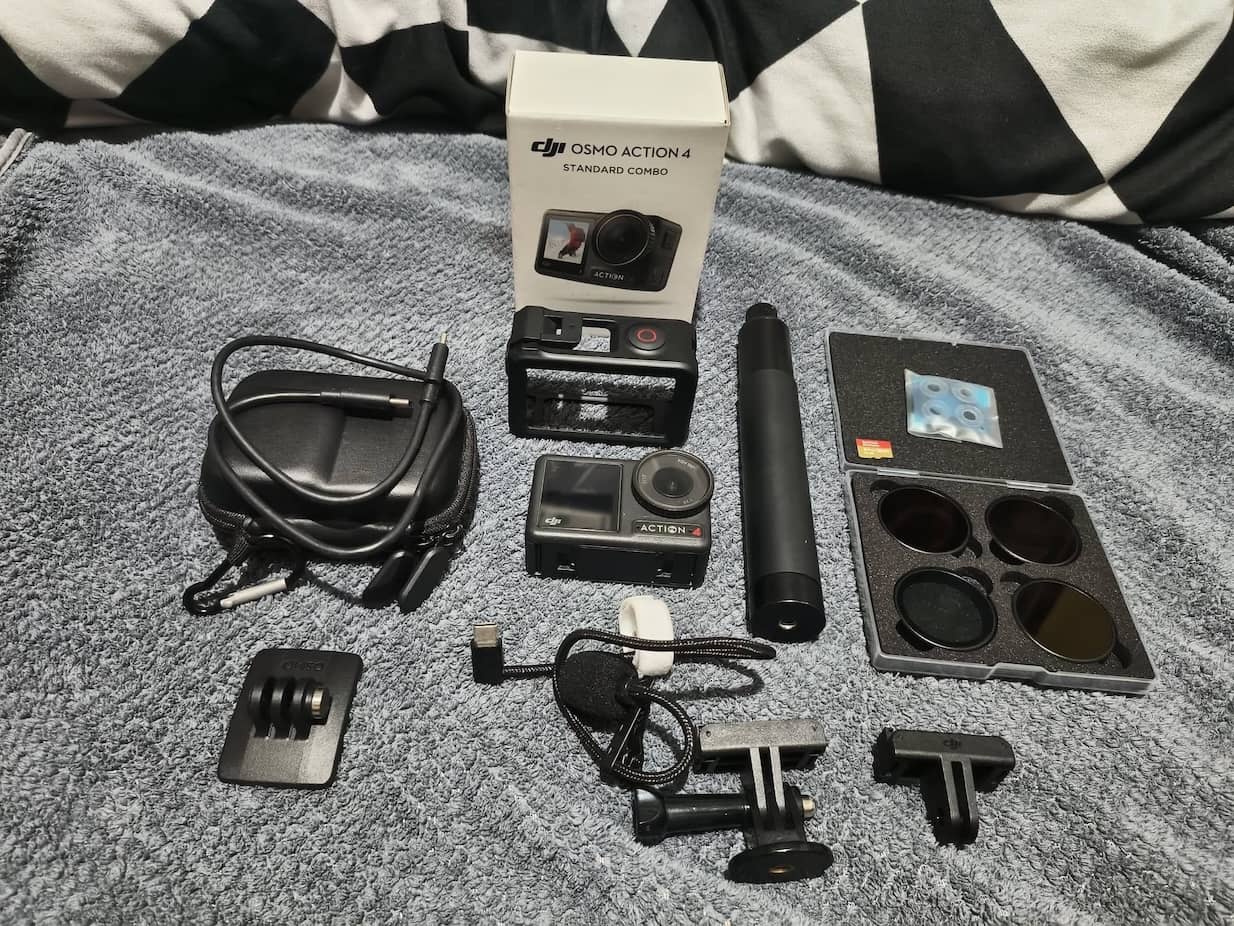
DJI rates the battery for up to 160 minutes, but that figure was measured at 1080p/24fps with Wi-Fi and the screens turned off; 4K recording will naturally shorten it. There is also no internal storage, so a microSD card is mandatory. Even with those limitations, the Action 4 offers the strongest balance of image quality, stabilization, and durability for the money….provided you can still find the Standard Combo in stock.
AKASO Brave 7 LE

Sometimes a front screen is more useful to a beginner than another professional video codec. The Brave 7 LE combines a front framing display with a 2-inch rear touchscreen, so you can set up a travel vlog or family recording without repeatedly guessing whether your face is still in the shot.
Its specifications are modest but useful: 4K video at 30fps, 20MP photos, time-lapse and slow-motion modes, plus six-axis electronic stabilization. The camera body is rated IPX7, which is suitable for rain, splashes, and accidental spills. Proper underwater recording requires the waterproof housing, so this is not a bare-camera alternative to the 18-meter waterproof Action 4.
At $139.99, the Brave 7 LE is easier on the wallet than either DJI. However, the 30fps ceiling means it cannot produce the same smooth 4K slow motion, and its stabilization system is less versatile than DJI’s RockSteady and HorizonSteady modes. It makes the most sense for beginners filming themselves, family holidays, or occasional outdoor adventures rather than demanding high-speed sports.
AKASO Brave 4 Pro

The least expensive camera on this list does not arrive empty-handed. For $109.99, the Brave 4 Pro records 4K/30fps video and 20MP photos, provides front and rear displays, and supports an external microphone. Electronic stabilization is also included, which gives it a clear advantage over ultra-cheap cameras that merely advertise a high resolution.
Water is where the included housing earns its place in the box. With the case installed, AKASO rates the camera to 131 feet, or approximately 40 meters. That is impressive for the price, although the case adds bulk and limits audio recording. The front display also makes basic self-recording easier, while the rear touchscreen handles menus and playback.
The compromise is performance headroom. There is no 4K/60fps or 4K/120fps option, and the camera cannot match the case-free waterproofing or more advanced stabilization of DJI’s models. AKASO’s official store was also showing the standalone package as sold out when checked, so availability may depend on third-party retailers. If your budget has a hard ceiling near $100, though, this remains the most complete starter kit of the five.
DJI Osmo Action 5 Pro

Calling a $319 camera “budget” requires a little explanation. The Action 5 Pro is not the cheapest option, but it is the one to buy if you would rather pay more once than quickly outgrow an entry-level camera.
Its 1/1.3-inch sensor delivers up to 13.5 stops of dynamic range, while video tops out at 4K/120fps and photos reach approximately 40MP. DJI also adds subject tracking, bright front and rear OLED touchscreens, and 64GB of internal storage, of which 47GB is usable. Forgetting your microSD card is no longer enough to ruin the first hour of a trip.
The 146g body can descend to 20 meters without a case, and DJI quotes up to 240 minutes of battery life. Again, that maximum was recorded at 1080p/24fps with Wi-Fi and both displays turned off, so it should not be mistaken for four hours of continuous 4K/120fps filming. The Action 4 remains the smarter bargain for most buyers, but the Action 5 Pro justifies the extra cost with longer endurance, internal storage, better displays, and stronger low-light tools.
GoPro HERO – Best Compact Action Camera

The best action camera might simply be the one that does not get left at home. Weighing only 86g, the compact GoPro HERO is 46% lighter and occupies 35% less volume than the HERO13 Black. Built-in mounting fingers and one-button control reinforce the point: this camera is designed to start recording before the moment passes.
It captures 4K/30fps and 1080p/30fps video, 12MP photographs, and 2.7K/60fps slow motion. The body is waterproof to 5 meters, while the built-in battery can run for up to 100 minutes at the highest video setting under GoPro’s test conditions. That makes it a friendly option for travel, children, casual cycling, and family days near the water.
There are two important catches. The battery cannot be removed, and HyperSmooth stabilization is applied through the GoPro Quik app rather than inside the camera. Footage viewed directly on the HERO or imported straight into another editor will therefore appear unstabilized until it has been processed and exported through Quik. It is delightfully simple, but not ideal for users who want stabilized files immediately or need to swap batteries during a long shoot.
Which Budget Action Camera Should You Buy?
The DJI Osmo Action 4 is the best overall choice. It offers the image quality, 4K/120fps recording, strong stabilization, and case-free waterproofing of a serious action camera without reaching the price of the Action 5 Pro.
For a smaller budget, choose the Brave 7 LE if a front screen and easy vlogging matter most. The Brave 4 Pro is the more aggressive bargain, especially if you need a large accessory kit or underwater housing. The GoPro HERO is the easiest camera to carry and operate, while the Action 5 Pro is worth stretching for if battery life, internal storage, and low-light performance are priorities.