Best Portable Power Stations for Home Backup, Camping & Emergencies
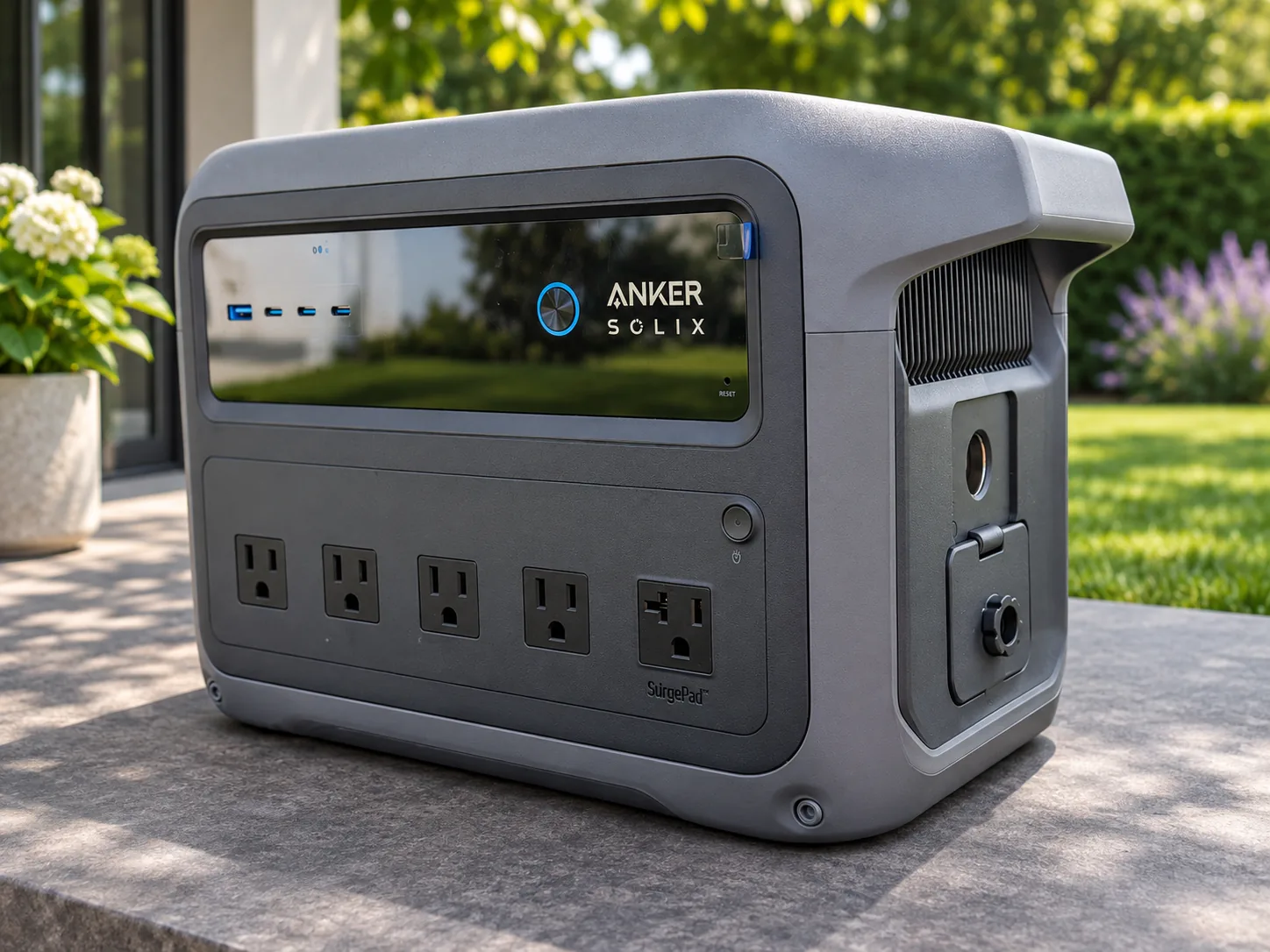
For a long time, “backup power” meant a gas generator rattling away in somebody’s driveway, and everyone else lighting candles and waiting it out. That math has changed. Portable power stations, which are essentially very large rechargeable batteries with outlets on the front, have quietly moved from the camping aisle into the hall closet. They don’t burn anything, so there’s no exhaust, no gas can in the garage, and no pull cord. “These generators have no fumes,” says Dave Trezza, a test engineer who oversees generator testing at Consumer Reports, and the ones his team tested ran close to silent.
That last part matters more than it sounds. Gas generators should never come indoors, and the Consumer Product Safety Commission is blunt that a garage with the door open doesn’t count either. A battery, by contrast, can sit right next to your couch or your bed. The trade-off is endurance: once it’s empty, you can’t top it off with a gallon of gas. Paolo Fu, who leads generator and power-station testing at Consumer Reports, puts it plainly. Power stations, he says, “are best for outages that last for hours, not days.”
To build this list, we started with spec sheets and then went looking for independent lab and field tests, because the number printed on the box and the number you actually get are not always the same. We kept it to five picks on purpose. Two are from Anker and Jackery, the brands most people already know; the other three earned their spots on charging speed, sheer output, and room to grow.
What We Looked For
Capacity versus output. These two numbers get mixed up constantly, so here’s the short version. Watt-hours (Wh) tell you how much energy is in the tank; watts (W) tell you how big a thing you can plug in at once. To estimate run time, divide the watt-hours by what your device draws, then knock off 10 to 15 percent for conversion losses. Consumer Reports’ testers also suggest leaving some headroom between the total wattage of everything you plan to plug in and the station’s maximum output, because appliances like refrigerators surge when their compressors kick on.
Battery chemistry. Every pick here uses lithium iron phosphate, or LiFePO4 (LFP for short). It’s heavier than the lithium-ion in your phone, but it’s rated for thousands of charge cycles instead of hundreds, and it’s more stable, which is what you want from something that will sit in a closet for months at a time.
How fast it refills. Consumer Reports weighs recharge speed more heavily than anything else in its ratings, and for good reason. An outage is rarely one clean block of darkness: the grid flickers back for an hour, then quits again. A station that can go from empty to full in about an hour lets you grab that window. Solar panels help, but CR’s testers found they’re better at stretching a battery’s run time than refilling it from zero, especially under clouds.
UPS mode. If anyone in your house sleeps with a CPAP machine, this is the spec to care about. A station with an uninterruptible power supply sits between the wall and your device and takes over the instant the grid drops. Look for a switchover time of 20 milliseconds or less; most of our picks are at 10 or under.
Weather resistance. Most power stations aren’t built for rain. Fu warns against using one outdoors in wet weather unless the manufacturer says it’s waterproof, so check the rating before you leave one on an open deck, and plan on a covered porch or a tarp.
Best Portable Power Station
Anker Solix C1000 Gen 2
- Capacity: 1,024Wh
- Output: 2,000W
- Full recharge: 49 minutes
- Weight: about 25 pounds
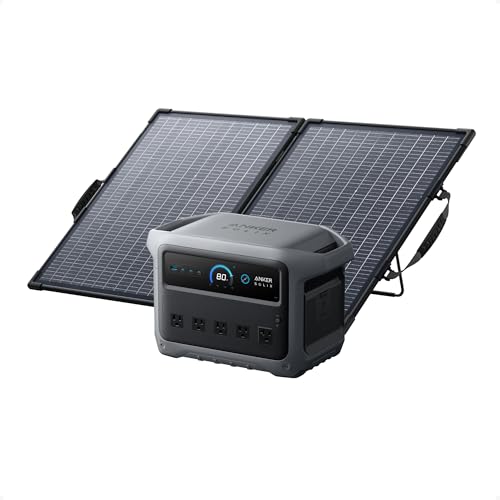
If you want one power station and never want to think about it again, this is the one. GearJunkie, which pushed 11 stations through everything from electric coolers to lawn mowers, named the C1000 Gen 2 its best overall pick, noting that Anker made an already popular model faster, lighter, and more powerful. Outdoor Life’s testers singled it out as the best one to pair with solar panels.
The headline number is the recharge time. Flip on Anker’s fast-charging mode in the app and it goes from empty to full in 49 minutes off a wall outlet, which is exactly what you want when the grid comes back for an hour and then quits again. It can also take up to 600 watts of solar. Meanwhile, its 2,000-watt output is enough for a full-size fridge, a coffee maker, or a space heater on low, and it doubles as an uninterruptible power supply with a switchover time under 10 milliseconds, quick enough that a CPAP machine or a desktop computer won’t blink. The battery is rated for 4,000 cycles, and Anker says the whole unit is about 14 percent smaller and 11 percent lighter than comparable 1kWh stations, which matters when you’re the one carrying it down the basement stairs.
The trade-offs are small. Anker’s app is simpler than EcoFlow’s, with less detail on where your power is going, and the fan gets noticeably louder during fast charging. Neither is a reason to pass it up.
Jackery Explorer 1000 v2
- Capacity: 1,070Wh
- Output: 1,500W
- Full recharge: about an hour
- Weight: about 24 pounds

Jackery is the name most people think of first, and the Explorer 1000 v2 is a good reminder of why. Outdoor Life’s reviewers called it the easiest power station to use in their test group, and at roughly 24 pounds it’s one of the lightest 1kWh stations you can buy, about a pound lighter than the Anker and nearly four pounds lighter than the EcoFlow. That difference doesn’t sound like much until you’re hauling it from the car to a campsite, or up from the basement in the dark.
It’s also an upgrade where it counts. The original Explorer 1000 used ordinary lithium-ion cells rated for about 500 cycles; the v2 switched to LiFePO4 and is rated for 4,000 cycles while keeping at least 70 percent of its capacity. With fast charging switched on in the app, it refills from a wall outlet in about an hour, and it accepts up to 400 watts of solar. Jackery’s interface is refreshingly simple: a few buttons, a clear screen, and outlets that do what they say.
The catch is output. At 1,500 watts continuous (with 3,000-watt surges), it’s the least powerful of our full-size picks, so it can run a fridge and a few lights but may balk at a microwave and a coffee maker at the same time. For most outages and nearly any camping trip, that’s plenty.
EcoFlow Delta 3 Plus
- Capacity: 1,024Wh (expandable to 5kWh)
- Output: 1,800W
- Full recharge: 56 minutes
- Weight: about 28 pounds

The Delta 3 Plus is the pick for people who suspect they’ll want more power later. On its own, it’s a solid 1kWh station: 1,800 watts of output with 3,600-watt surges, a LiFePO4 battery rated for 4,000 cycles, and a full recharge from the wall in under an hour. But plug in one of EcoFlow’s extra batteries and it grows, all the way up to 5kWh, enough to keep a fridge, a router, and a few lights going through a long weekend without the grid. StorageReview, which ran it through full discharge and recharge cycles in its lab, called it a thoughtful redesign of EcoFlow’s popular Delta line.
EcoFlow’s app is also the most detailed of the bunch. You can watch exactly how much each outlet is drawing, and the Delta 3 Plus lets you set which devices get priority during an outage, so the fridge keeps running even if the TV doesn’t. Like the Anker, it doubles as a UPS for computers and medical devices.
The downside of building a system is that you’re committing to it. EcoFlow’s extra batteries only work with EcoFlow stations, and they aren’t cheap. If you’re sure 1kWh is all you’ll ever need, the Anker is the better buy; if you’re not sure, this is the safer bet.
DJI Power 1000 V2
- Capacity: 1,024Wh (expandable to about 11kWh)
- Output: 2,600W
- Full recharge: 56 minutes
- Weight: about 31 pounds

Yes, the drone company. DJI’s Power 1000 V2 holds the same 1,024 watt-hours as the Anker and EcoFlow but pushes out 2,600 watts continuously, the most of any 1kWh station on this list. That’s enough headroom to run a microwave, a kettle, or a circular saw without the station tripping its overload protection, and DJI says it holds that output until the battery is empty rather than throttling down as it drains.
It’s also quick and quiet. From a wall outlet, it reaches 80 percent in 37 minutes and full in 56, and with DJI’s optional 1,800-watt solar and car charger, it can refill from the sun in about 40 minutes under ideal conditions. DJI rates it at about 26 decibels while charging in standard mode, roughly the level of a whisper, which matters if it’s sitting in your bedroom running a CPAP overnight. It has a sub-10-millisecond UPS, two 140-watt USB-C ports that can fast-charge a laptop, and room to grow: up to five expansion batteries take it to more than 11kWh.
The trade-offs: it’s the heaviest of the 1kWh picks at about 31 pounds, and many of its best tricks, like the super-fast solar and alternator charging, require accessories sold separately. If you already fly DJI drones, though, it can also fast-charge their batteries, which makes it an easy call.
Bluetti Elite 200 V2
- Capacity: 2,073Wh
- Output: 2,600W
- Battery life: 6,000+ cycles
- Weight: about 53 pounds

If your outages tend to last overnight or longer, or you simply want to stop doing math every time you plug something in, step up to 2kWh. The Bluetti Elite 200 V2 packs about twice the capacity of our other picks into a box not much bigger than they are, with the same 2,600 watts of output as the DJI and short bursts up to 3,900 watts in Bluetti’s power-lifting mode. Its battery is rated for more than 6,000 cycles, the most of anything here; Bluetti estimates that works out to a 17-year service life. “Bluetti is definitely a rising star in the power world,” says Paul Rankin, who tests power stations for Bob Vila.
It holds up in real-world use, too. StorageReview ran it as a backup in a live home lab and found its UPS mode reliable, with a switchover of 15 milliseconds or less, and it can take up to 1,000 watts of solar, which StorageReview says refills it in roughly two and a half hours under good sun. AppleInsider’s reviewer called its bright, easy-to-read display the best they’d seen on a power station.
The obvious drawback is weight. At about 53 pounds, it’s a two-hands, bend-at-the-knees lift, and it isn’t waterproof, so it belongs indoors or under cover. If you need to carry your power around, one of the 1kWh picks above is the better fit. If it’s going to live in a closet until the lights go out, this is the one that lasts longest.
A Few Safety Notes
A power station is about the safest backup power you can buy, but it’s not a generator replacement in every situation, and it’s worth being clear-eyed about that. If you also own a gas generator for long outages, keep it outside and well away from windows and doors. The Consumer Product Safety Commission doesn’t mince words: “CO poisoning from portable generators can kill whole families in minutes.” A battery-powered carbon monoxide alarm is cheap insurance either way.
A few habits will keep your station ready when you need it. Store it indoors at room temperature, and check your model’s manual for how often to top it up; most manufacturers recommend a charge every few months even if you never use it. Give it some breathing room while it’s running, since the fans need airflow during heavy loads and fast charging. And if you’re counting on it for a CPAP or other medical device, look up your machine’s actual wattage (with and without the humidifier, which can multiply the draw), then test a full night on battery before you need to.
Finally, be realistic about scale. Even our biggest pick won’t run central air or an electric range for long. A power station is for keeping the essentials going, the fridge, the phones, the lights, the medical devices, until the grid comes back. For that job, any of these five will do it quietly, indoors, and without a single trip to the gas station.