Our Top Picks for Carry-On Luggage in 2026
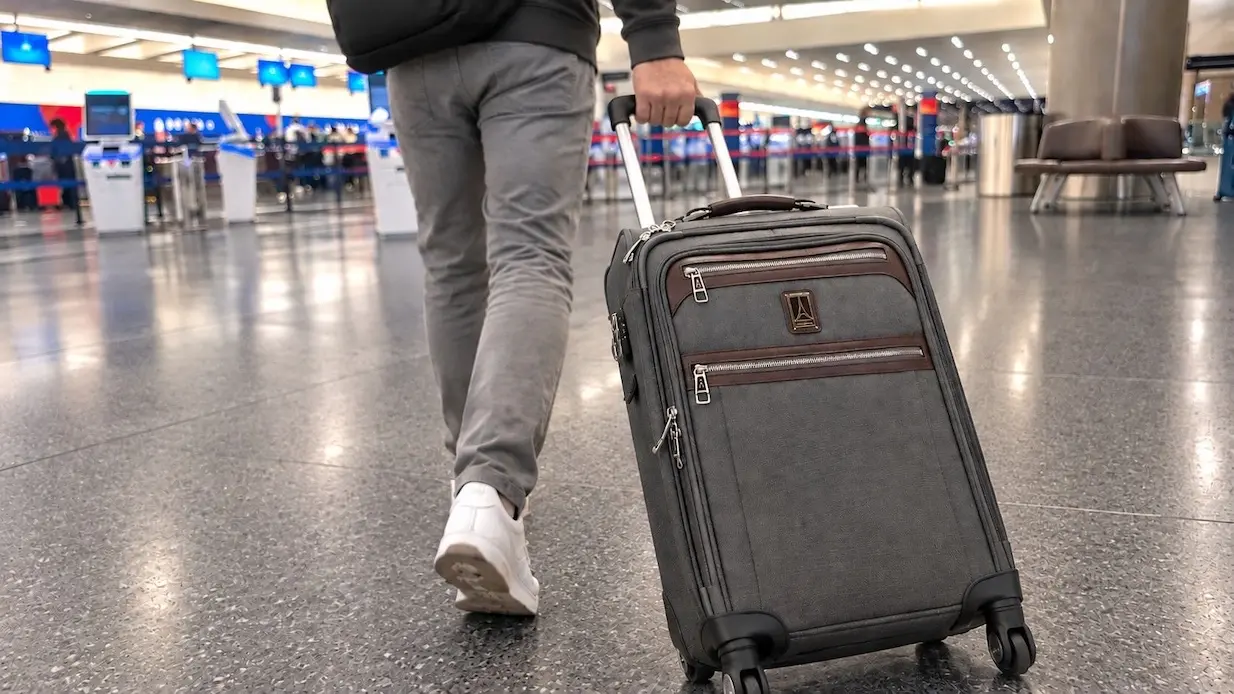
A good carry-on should disappear into the background of a trip. It should roll where you point it, swallow a useful amount of clothing without becoming unwieldy, and make the repeated cycle of lifting, packing, unpacking, and squeezing into an overhead bin a little less annoying.
For most travelers, the Travelpro Platinum Elite Carry-On Spinner strikes that balance better than anything else here. It’s thoughtfully organized, exceptionally easy to maneuver, and built with the sort of hardware that makes sense for frequent travel. The Travelpro Maxlite 5 is a better fit if low weight matters more than premium extras, while the Briggs & Riley Essential 2-Wheel Carry-On is the upgrade we’d consider for travelers who value packing efficiency and long-term durability above price. The Samsonite Freeform gives hardshell fans plenty of usable room for considerably less money.
One important clarification: the Briggs & Riley Large Expandable Spinner is not a carry-on at all. It’s a full-size checked suitcase, so we’ve included it below as an alternative for travelers who need substantially more room.
The Best Carry-Ons for Every Kind of Traveler
Travelpro Platinum Elite Carry-On Spinner
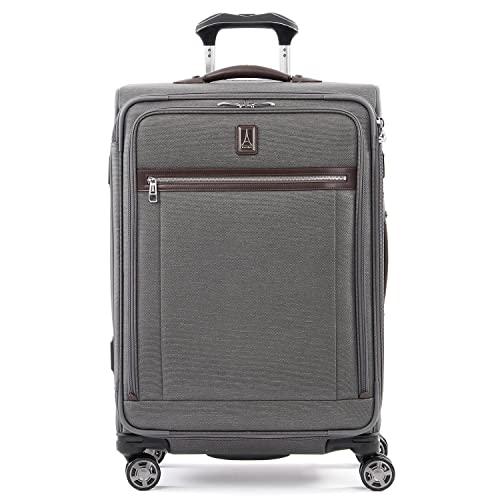
The Platinum Elite doesn’t have one attention-grabbing trick. Instead, nearly everything about it feels unusually well resolved.
Its PrecisionGlide system combines eight MagnaTrac self-aligning spinner wheels with a multi-position PowerScope handle, and that combination is a major reason this suitcase feels so composed in motion. The magnetic wheel alignment encourages the bag to track in the direction you’re walking rather than constantly wandering off to one side. OutdoorGearLab gave the current Platinum Elite a perfect score for ease of transport and noted its balance and straight-tracking wheels as particular strengths.
Organization is similarly thorough without becoming cluttered. You get accessory pockets, a removable TSA-size wet pocket, compression tie-downs, a power-bank compartment and USB connection, plus a fold-out suiter that makes this an especially appealing option for business travelers carrying shirts, dresses, or a suit. The high-density nylon exterior receives Travelpro’s DuraGuard treatment for stain and abrasion resistance.
There’s plenty of room, too. Travelpro rates the case at 46 liters and 7.8 pounds, although OutdoorGearLab’s measurements came out closer to 40 liters and 8.1 pounds. Either way, this isn’t an ultralight suitcase. All that hardware and organization adds weight before you’ve packed a single sock.
There’s another catch: size. Its overall dimensions are 23.5 x 14.5 x 9 inches, slightly beyond the commonly published 22 x 14 x 9-inch limit of several major U.S. airlines. Travelpro says it has nevertheless been tested in the sizers and overhead bins of major U.S. carriers, but we’d still check your airline carefully….particularly for international or budget flights.
For frequent domestic flyers, however, few carry-ons here combine mobility, organization, capacity, and construction this convincingly.
Travelpro Maxlite 5 Softside Carry-On Spinner
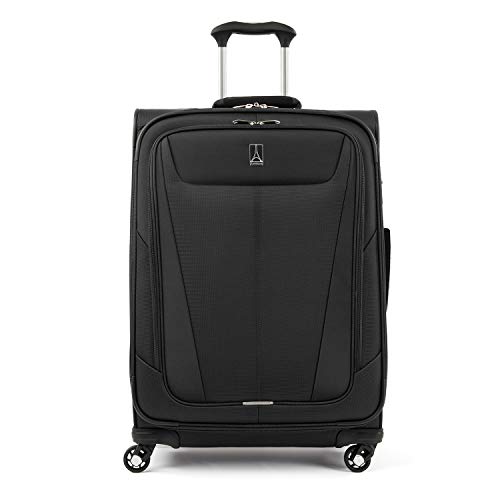
At 5.4 pounds, the Maxlite 5 starts with a huge advantage: you aren’t spending much of your baggage allowance on the suitcase itself.
That low weight doesn’t leave you with a stripped-out nylon box. There are two quick-access front pockets, a full-length interior lid pocket, adjustable hold-down straps, a comfortable Contour Grip, and a tapered expansion zipper that can add up to two inches of depth. Travelpro rates capacity at a generous 46 liters. Its polyester exterior is also treated with DuraGuard to help fend off water and stains.
The four single-spinner wheels are at their happiest on terminal floors and other smooth surfaces. In OutdoorGearLab’s testing, they rolled smoothly when the case was fully packed but generated more vibration over sidewalk cracks and gravel, and the bag could shift slightly from side to side when heavily loaded. It never became a serious tipping problem, though. The same testing found enough room for a seven-day warm-weather packing list without using the expansion zipper.
The trade-off is refinement. You don’t get the Platinum Elite’s magnetic wheels, elaborate garment system, or laundry list of organizational extras.
That’s also the point.
For travelers who would rather begin a trip with a suitcase weighing barely over five pounds than pay for a collection of premium extras, the Maxlite 5 is the more sensible Travelpro.
Briggs & Riley Essential 2-Wheel Expandable Carry-On

The Briggs & Riley Essential takes a different approach to mobility. Instead of four exposed spinner wheels, it rides on two substantial wheels tucked closer to the body of the case. You give up the effortless sideways movement of a spinner, but a two-wheel layout can feel more planted when you’re pulling a suitcase over less-than-perfect pavement.
Packing is where this bag really separates itself.
Briggs & Riley mounts its Outsider handle on the exterior of the suitcase, leaving the interior floor flat instead of interrupting it with two telescoping-handle rails. Its CX compression system can expand the bag by up to 30%, after which you close it and compress the case back toward its original dimensions. The domestic 22-inch version provides roughly 39 to 51 liters of space depending on expansion.
An integrated garment carrier and cinch-down panels make especially good use of that flat packing space. This is the kind of organization that matters more when you’re traveling with pressed clothing than when you’re throwing T-shirts and packing cubes into a case.
Construction is equally serious: ballistic nylon, self-repairing YKK zippers, impact-resistant components, an aluminum telescoping handle, and Briggs & Riley’s unusually broad lifetime guarantee, which the company says also covers airline damage.
But none of this comes cheaply, or lightly. The Essential weighs 9.7 pounds empty, considerably more than the Maxlite 5, and its 22 x 14 x 9-inch body expands as deep as 11.5 inches. Leave it fully expanded and carry-on compliance becomes considerably less certain.
It’s overkill for an occasional weekend getaway. For someone who flies constantly and wants one exceptionally well-built suitcase to use for years, the argument becomes much stronger.
Samsonite Freeform Carry-On Spinner

The Freeform gets the fundamentals right without pretending to be a luxury suitcase.
Its injection-molded polypropylene shell has some natural flex, keeping weight down to a manageable 6.5 pounds, while four sets of double spinner wheels provide an easy multidirectional roll. There’s also a recessed TSA combination lock, built-in ID tag, cross ribbons, divider panel, interior pockets, and another inch of expansion if the return trip involves a few extra souvenirs.
More importantly, it actually holds quite a bit. OutdoorGearLab measured 41.2 liters of usable space and praised both its packing capacity and smooth ride. Pack Hacker likewise found the largely open main compartment easy to use with bulky items.
The Freeform’s lower price does show in a few places. Its trolley handle is relatively thin, the wheel assemblies are more basic than what you’ll find on the Travelpro or Briggs & Riley models, and the exterior can collect visible scuffs and scratches. Small belongings can also disappear into the recessed corners of the molded interior.
And, once again, watch the dimensions. At 23 x 15 x 10 inches before expansion, it already exceeds the published 22 x 14 x 9-inch allowance used by several U.S. airlines. Samsonite itself advises checking the rules of your specific carrier.
Still, if you want a roomy, lightweight hardshell with a TSA lock and smooth spinner mobility without stepping into premium-luggage pricing, the Freeform offers a lot for the money.
Briggs & Riley Large Expandable Spinner

Don’t let the family resemblance fool you: this is not the Briggs & Riley to buy if your goal is to skip baggage claim.
The current Sympatico Large Expandable Spinner measures 30 x 20 x 12 inches, expanding to 14.25 inches deep, and offers an enormous 110 to 131 liters of capacity. It weighs 13.6 pounds before packing. Those are checked-luggage numbers, full stop.
As a checked suitcase, though, it’s formidable. The three-layer recycled polycarbonate shell is paired with protected high-density wheels, YKK zippers, a built-in TSA lock and Briggs & Riley’s CX system, which adds roughly 20% more packing space when needed. The 70/30 lid also makes the giant case somewhat easier to use on a luggage rack than a traditional 50/50 clamshell.
Its biggest strength is also the reason it doesn’t belong in a true carry-on roundup: it’s huge. Pack it anywhere near its full 131-liter capacity and airline weight limits may become a concern long before you run out of physical room.
Consider it if you want a premium checked bag to pair with one of the carry-ons above. For overhead-bin travel, look elsewhere.
How to Choose the Best Carry-On Luggage
A carry-on doesn’t need the most pockets, the toughest-looking shell, or the largest advertised capacity to be good. What matters is how well the whole package works once you’re actually moving: whether it fits the airlines you fly, rolls predictably through a terminal, holds enough without becoming cumbersome, and survives repeated trips without its wheels, handle, or zippers becoming weak links.
Start With the Airline, Not the Suitcase
Before comparing wheels or materials, check the dimensions.
There is no universal carry-on standard. 22 x 14 x 9 inches is common among U.S. carriers such as United and JetBlue, but other airlines allow noticeably different dimensions; international carriers can be narrower or shorter. Samsonite’s current airline guide, for example, lists limits ranging from 21.5 x 15.5 x 9 inches on Air Canada to 24 x 16 x 10 inches on Southwest.
And make sure you’re comparing overall dimensions, not just the body of the suitcase. Wheels and handles count. Expansion can also push an otherwise compliant bag beyond an airline’s depth limit.
If you mostly fly domestically on the same few airlines, a slightly larger carry-on can give you more usable space. Frequent international travelers are better served by a more conservative cabin-size case.
Hardshell or Softshell?
Neither is inherently better.
A hardshell offers more structure around fragile belongings and generally handles bumps and wet weather better. Polycarbonate is common on higher-end cases, while polypropylene can provide a useful combination of flexibility, durability, and low weight. The downside is that a rigid shell doesn’t give you much room to cheat when you’ve overpacked, and most hardshells have little or no exterior storage.
A softshell is more forgiving. It can flex around an awkward load, often has front pockets for things you want within reach, and is frequently lighter than a comparable hard case. It’s particularly convenient if you regularly pull out a jacket, passport, charger, or other small item while traveling.
Don’t assume hardshell automatically means more durable, though. OutdoorGearLab’s testing hasn’t found a major inherent durability advantage for either style; construction quality matters more.
Choose the format that suits how you pack, not simply the one that looks tougher.
Pay More Attention to the Wheels Than You Think
Bad wheels can make an otherwise excellent suitcase miserable.
Four-wheel spinners are easiest inside airports. Because the case remains upright and can move in almost any direction, they’re particularly nimble around security lines, narrow aisles, and crowded terminals. But wheel quality matters enormously: poorly aligned spinners can wander, vibrate, or require constant correction rather than staying alongside you.
Traditional two-wheel bags trade that agility for a more purposeful forward roll. Their wheels are generally larger and recessed into the case, helping them track straight and cope better with cracked pavement, cobblestones, curbs, and other uneven ground. Recessed wheels also consume less of the suitcase’s overall dimensions and are somewhat less exposed to impacts.
If most of your journey happens between taxi, terminal, and hotel, we’d lean toward a good spinner. For lots of walking through older cities or rough streets, two substantial wheels still make plenty of sense.
Don’t Chase Capacity at Any Cost
Advertised liters tell only part of the story.
Two cases with similar exterior dimensions can pack very differently depending on wheel intrusion, telescoping-handle rails, dividers, pockets, and the shape of the interior. A broad, flat compartment may prove considerably easier to fill than a supposedly larger case broken up by bulky hardware.
Compression systems can help here. A good panel or set of straps keeps clothing from shifting and can make an awkward pile much easier to contain. Expansion is useful as well—particularly on the trip home—but think of it as temporary extra room, not free capacity. Once expanded, many carry-ons are too deep to meet the dimensions they were originally designed around.
Organization should also match your packing style. Business travelers may genuinely benefit from a garment panel and laptop compartment. Someone who already uses packing cubes may prefer one large, uncluttered compartment instead of a maze of small pockets.
Weight Matters Before You Pack Anything
A suitcase’s empty weight is easy to overlook because domestic U.S. airlines often focus more on dimensions than carry-on weight. That changes quickly when traveling internationally.
A lighter case leaves more of any weight allowance for your belongings and is easier to hoist overhead, carry upstairs, or drag onto a train. The difference can be substantial even among similar-looking luggage: Travelpro currently lists its Maxlite 5 spinner at 5.4 pounds, while its more heavily equipped Platinum Elite is 7.8 pounds.
Still, don’t chase the lowest number blindly. Larger wheels, sturdy handles, reinforced corners, better zippers, and useful organization all weigh something. What you’re after is a favorable weight-to-capacity ratio without sacrificing the components that take the most abuse.
Construction Quality Is More Than the Shell
People naturally focus on shell material or fabric, but luggage often fails somewhere else first.
Pay close attention to:
- how much the telescoping handle twists when extended;
- whether the wheels feel solid and track consistently;
- the smoothness and size of the zippers;
- stitching and seams around handles;
- reinforcement around corners and wheel mounts;
- and how well the bag maintains its shape when heavily packed.
For softside luggage, dense nylon or ballistic nylon generally appears on more premium designs, while polyester can keep both weight and cost lower. Hardshell quality similarly depends on more than simply seeing “polycarbonate” in the specifications.
The best construction doesn’t necessarily feel indestructibly rigid. A little flex can help a suitcase absorb an impact rather than crack under it.
Consider the Warranty…Especially on Expensive Luggage
A generous warranty matters more on a suitcase than on many travel accessories because wheels and handles are mechanical components that see repeated abuse.
But read the terms rather than taking “lifetime warranty” at face value. Coverage varies widely: some policies address manufacturing defects only, while others provide broader repair protection. Warranty accessibility matters, too. A theoretically excellent policy isn’t especially useful if obtaining a repair is complicated where you live.
The more you’re spending, the more important repairability becomes. A premium suitcase makes far more sense if a damaged wheel or handle can be repaired rather than turning the entire case into an expensive piece of trash.
What Matters Most?
For most travelers, we’d prioritize carry-on luggage in roughly this order:
Airline-compatible size → wheel and handle performance → construction quality → usable capacity and organization → empty weight → extra features.
USB ports, removable laundry bags, integrated luggage tags, and elaborate pocket systems can all be convenient. None compensates for a suitcase that tracks poorly, wastes interior space, or is just a little too large for the airline you regularly fly.
The best carry-on is ultimately the one that creates the least friction during a trip. It fits where it’s supposed to fit, packs the way you naturally pack, and moves from curb to gate without demanding much attention. That’s less exciting than a long feature list—but after enough flights, it’s what you’ll appreciate most.
Which Carry-On Should You Buy?
The Travelpro Platinum Elite is the strongest all-around choice here. Its wheels are unusually easy to control, the organization is genuinely useful, and its construction is convincing enough for frequent travel.
Choose the Maxlite 5 instead if weight is your priority. At just 5.4 pounds, it leaves substantially more of your baggage allowance for the things you’re actually traveling with.
The Briggs & Riley Essential 2-Wheel Carry-On makes the most sense for high-mileage travelers who value durability, flat packing space, garment handling, and a sophisticated compression system enough to tolerate a much higher price and heavier starting weight.
And for hardshell buyers trying to keep the cost reasonable, the Samsonite Freeform is the easy value pick. It isn’t as refined as the Travelpro or as heavily engineered as the Briggs & Riley, but its combination of low weight, generous capacity, expandable storage, and smooth spinner wheels makes it difficult to dismiss.
Whichever one you choose, check the overall dimensions….including wheels and handles, against the airline you actually fly. Several otherwise excellent bags in this group sit outside the published limits of some carriers, and international restrictions can be considerably tighter.