Our Best Picks: Top-Rated Vlogging Cameras
Vlogging cameras now come in several very different forms. A traditional mirrorless camera gives you the best image quality and the freedom to change lenses, but it also requires more setup. Pocket gimbal cameras prioritize portability and smooth handheld footage, while action and 360-degree cameras are better suited to travel, sports, and unpredictable environments.
The DJI Osmo Pocket 3 is our easiest recommendation for solo creators who want polished footage without carrying a full camera kit. The Canon EOS R50 V is a more flexible starting point for creators who want interchangeable lenses, while the Sony ZV-E1 delivers the strongest cinematic image quality of the cameras covered here. Outdoor creators should look toward the DJI Osmo Action 6 or GoPro Hero13 Black, whereas the Insta360 X5 offers the most freedom to choose a viewing angle after recording.
Our Top Vlogging Camera Picks
- DJI Osmo Pocket 3: Best Overall for Solo Vloggers
- DJI Osmo Action 6: Best Action Camera for Vlogging
- Canon EOS R50 V: Best Entry-Level Interchangeable-Lens Camera
- GoPro Hero13 Black: Best for Accessories and Action Content
- Insta360 X5: Best for 360-Degree Vlogging
- Sony ZV-E1: Best Full-Frame Vlogging Camera
DJI Osmo Pocket 3

Why We Picked It?
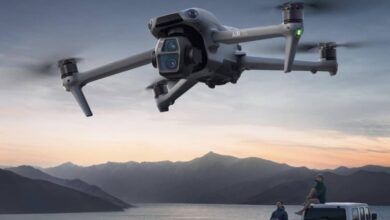
The DJI Osmo Pocket 3 is one of the easiest cameras for producing smooth, professional-looking videos without assembling a larger mirrorless setup. Its mechanically stabilized three-axis gimbal creates much more natural walking footage than electronic stabilization alone, while the compact body makes it easy to hold at arm’s length or carry throughout the day.
Its 1-inch sensor is another major advantage. It captures cleaner footage in dim restaurants, city streets, hotel rooms, and other locations where smaller action-camera sensors often struggle. The camera supports 4K recording and 4K/120fps slow motion, although the highest frame rate is intended specifically for the Slow Motion mode.
ActiveTrack 6.0 can recognize and follow a subject while the gimbal physically adjusts its direction. This is particularly useful for creators who film alone: you can put the camera down, move around the frame, and let it maintain the composition. The rotating 2-inch screen also provides an intuitive way to switch between horizontal and vertical recording.
The Pocket 3 is not designed to replace an action camera in harsh environments. Its exposed gimbal requires more careful handling, and the fixed lens provides less creative flexibility than an interchangeable-lens camera. Even so, its combination of portability, tracking, stabilization, and low-light image quality makes it the most balanced option for everyday vlogging.
Who It’s For?
The Pocket 3 makes the most sense for travel vloggers, food creators, walk-and-talk YouTubers, and anyone who regularly films without a camera operator. It is also a strong step up from a smartphone for creators who want smoother motion and better nighttime footage without learning a complicated camera system.
Creators who regularly film underwater, mount their cameras to vehicles, or record extreme sports should choose the Osmo Action 6 instead. Those who want to experiment with different focal lengths and achieve more pronounced background blur should consider the Canon EOS R50 V or Sony ZV-E1.
Pros
- Excellent three-axis mechanical stabilization
- Strong image quality from a 1-inch sensor
- Reliable subject tracking for solo recording
- Compact enough for daily travel
- Easy horizontal and vertical shooting
- Direct compatibility with DJI wireless microphones
Cons
- Exposed gimbal requires careful handling
- Fixed lens limits framing options
- Not intended for rough action-camera use
- Creator Combo accessories increase the total cost
DJI Osmo Action 6

Why We Picked It?
The DJI Osmo Action 6 stands out because it addresses one of the biggest weaknesses of traditional action cameras: inconsistent image quality in difficult lighting. Its 1/1.1-inch square sensor is paired with a variable f/2.0-to-f/4.0 aperture, allowing the camera to admit more light in darker conditions while providing additional control in brighter environments.
That advantage is noticeable when recording early-morning runs, evening street footage, forests, indoor attractions, and other situations where action cameras usually produce noisy shadows. Independent testing has also praised the Action 6 for its image quality, responsive touchscreen, durable construction, battery performance, and resistance to overheating during typical recording sessions.
The camera is waterproof to 20 meters without an additional case and offers up to four hours of rated operating time under DJI’s test conditions. It also includes approximately 50GB of usable internal storage, which can save a shoot when you forget a memory card or fill one unexpectedly.
DJI’s magnetic mounting system makes it easy to move the camera between a selfie stick, backpack strap, helmet mount, or tripod. Direct wireless microphone connectivity is another meaningful advantage for vloggers because it reduces the need for a separate receiver attached to the camera.
The variable aperture does not turn the Action 6 into a mirrorless camera, however. The ultra-wide lens still produces the familiar action-camera look, and creators who want natural background separation or longer focal lengths will need a different type of camera.
Who It’s For?
The Osmo Action 6 is ideal for travel vloggers, cyclists, hikers, runners, swimmers, and outdoor creators who need a camera that can handle water, drops, dust, and changing weather. Its front screen and wireless microphone support also make it practical for traditional face-to-camera vlogging.
It is less suitable for studio creators who prioritize shallow depth of field, lens selection, or high-end cinematic controls. For those needs, the Sony ZV-E1 is a substantially more capable—though much more expensive—option.
Pros
- Large sensor for an action camera
- Variable f/2.0-to-f/4.0 aperture
- Strong low-light performance
- Waterproof to 20 meters without a case
- Long rated battery life
- Built-in storage
- Convenient magnetic mounting system
Cons
- Ultra-wide action-camera perspective is not ideal for every vlog
- Aperture control is less flexible than on a mirrorless camera
- Some accessories add significantly to the total price
- Smaller lens ecosystem than GoPro’s
Canon EOS R50 V

Why We Picked It?
The Canon EOS R50 V is built specifically for creators who want to move beyond smartphones and compact cameras. Rather than simply adapting a photography-oriented body for video, Canon added a front recording button, a vertical tripod socket, a redesigned interface, a zoom lever for compatible power-zoom lenses, and dedicated slow-and-fast recording controls.
Its 24.2-megapixel APS-C sensor offers a meaningful improvement in image quality over most action and pocket cameras. The R50 V records full-width 4K at up to 30fps, while 4K/60fps is available with a crop. It also supports Canon Log 3, false color, zebras, HLG, and 10-bit recording options, giving more experienced creators additional control over exposure and color grading.
Autofocus is one of the camera’s strongest qualities. Testing found its subject detection fast and accurate across people, animals, and vehicles, making it easier for solo presenters to remain in focus while moving toward or away from the camera. Its built-in microphones also work reasonably well in controlled indoor environments.
The main compromise is stabilization. The R50 V does not include in-body image stabilization, so the smoothness of handheld footage depends heavily on the lens, digital stabilization, or an external gimbal. The cropped 4K/60 mode can also make selfie framing more difficult unless you use a sufficiently wide lens.
As with most compact mirrorless cameras, heat can become a consideration during extended recording. However, testing results vary according to recording settings, ambient temperature, and the camera’s thermal limit configuration.
Who It’s For?
The EOS R50 V is a smart choice for beginner YouTubers, product reviewers, educators, and creators building their first interchangeable-lens system. It provides enough automatic assistance to be approachable but also includes advanced video tools that creators can learn over time.
It works especially well on a tripod or in a controlled filming space. Creators who mainly shoot handheld travel videos may find the Pocket 3 more convenient, while professionals seeking better low-light performance and in-body stabilization should look at the Sony ZV-E1.
Pros
- Detailed APS-C image quality
- Fast and reliable subject-detection autofocus
- Full-width 4K at up to 30fps
- Canon Log 3 and useful exposure tools
- Creator-focused buttons and interface
- Interchangeable RF and RF-S lenses
- Strong value for a dedicated video camera
Cons
- No in-body image stabilization
- 4K/60fps applies a substantial crop
- Smooth walking footage may require a gimbal
- Long recordings can be affected by heat
- Lens costs can increase the overall investment
GoPro Hero13 Black

Why We Picked It?
The GoPro Hero13 Black remains one of the most adaptable action cameras available, particularly for creators who already use GoPro mounts and accessories. It records up to 5.3K/60fps and 4K/120fps, providing plenty of resolution for reframing, stabilization, and slow-motion editing. Its 1,900mAh Enduro battery also improves continuous recording time compared with earlier GoPro generations.
The interchangeable HB-Series Lens Mods are what distinguish the Hero13 from many conventional action cameras. The Ultra Wide Lens Mod expands the field of view, the Macro Lens Mod allows the camera to focus much closer, and the anamorphic option gives creators a wider cinematic presentation. GoPro’s ND filters can also communicate with the camera and help automate settings intended to create more natural motion blur.
The Macro Lens Mod is particularly relevant for vloggers. Standard action-camera lenses are designed to keep distant subjects sharp, which means objects held close to the camera can appear soft. The Macro Lens Mod reduces the minimum focusing distance to approximately 11cm, making product demonstrations, food shots, and close selfie compositions considerably easier.
GoPro’s tall sensor format is also useful for creators who publish on multiple platforms. A single recording can provide enough vertical area to create both horizontal YouTube footage and vertical clips for Shorts, Reels, or TikTok.
Image quality in bright conditions is excellent, but low-light performance remains a limitation. Electronic stabilization needs shorter exposures to keep footage sharp, so nighttime walking videos can show more noise and motion artifacts than footage from the Osmo Action 6 or Pocket 3.
Who It’s For?
The Hero13 Black is best for action vloggers who want a mature accessory system and multiple ways to modify the camera for different shoots. It is particularly appealing to cyclists, motorsports creators, skiers, divers, and existing GoPro owners who already have compatible mounts.
Creators who mainly shoot after sunset should consider the DJI Osmo Action 6. Those who want one camera to capture every direction simultaneously will get more flexibility from the Insta360 X5.
Pros
- Sharp 5.3K/60fps video
- Excellent stabilization in good light
- Broad mounting and accessory ecosystem
- Creative interchangeable Lens Mods
- Useful tall-sensor format for social media
- Improved Enduro battery
- Rugged and waterproof construction
Cons
- Low-light video is weaker than DJI’s newer alternatives
- Lens Mods are sold separately
- Close focusing requires the Macro Lens Mod
- A complete creator setup can become expensive
Insta360 X5

Why We Picked It?
The Insta360 X5 solves a problem that is common when recording action or travel content: it is difficult to point the camera in the right direction while you are concentrating on the activity itself. The X5 records everything around it, allowing you to choose the composition, camera movement, and aspect ratio afterward.
It captures 360-degree video at up to 8K/30fps and 5.7K/60fps. Insta360 also includes a PureVideo mode for darker scenes and an InstaFrame mode that can produce a conventional flat video while retaining wider footage for later reframing.
This capture-first approach can produce angles that are difficult to achieve with a traditional camera. When used with an Invisible Selfie Stick, the camera can simulate tracking shots, floating third-person views, crane-like movements, and other perspectives without showing the stick in the final composition. It is particularly effective for walking tours, cycling, skiing, and travel videos in which the creator cannot constantly monitor the camera.
The X5 also improves the practicality of owning a 360-degree camera. Its lenses protrude from the body and are naturally vulnerable to scratches, but they can now be replaced by the user instead of requiring the entire camera to be sent away for repair. The camera is waterproof to 15 meters and has a rated battery life of up to 185 minutes under Insta360’s specified testing conditions.
The flexibility comes with additional work. Because 8K resolution covers the entire 360-degree sphere, a cropped flat view uses only a portion of those pixels. Reframed footage therefore will not contain the same detail as an ordinary camera recording a complete 8K frame in one direction. Editing and exporting 360-degree footage can also take longer and place heavier demands on a phone or computer.
Who It’s For?
The X5 is best for creators who value creative freedom more than a traditional point-and-shoot workflow. It is particularly useful for adventure vloggers, travel creators, motorcyclists, cyclists, and anyone who frequently realizes after recording that the camera was pointed in the wrong direction.
It is not the most efficient choice for simple seated videos or creators who want footage that is immediately ready to upload. A Pocket 3, R50 V, or ZV-E1 will produce a more conventional image with less editing.
Pros
- Captures every direction simultaneously
- Detailed 8K/30fps 360-degree recording
- Excellent reframing flexibility
- Replaceable lenses
- Improved low-light PureVideo mode
- Waterproof to 15 meters
- Invisible Selfie Stick effect
- Strong stabilization
Cons
- Requires more editing than a conventional camera
- Reframed clips contain less detail than the full 360-degree file
- Protruding lenses remain vulnerable to impacts
- Large files require significant storage and processing power
- Less natural-looking footage in very close compositions
Sony ZV-E1
Why We Picked It?
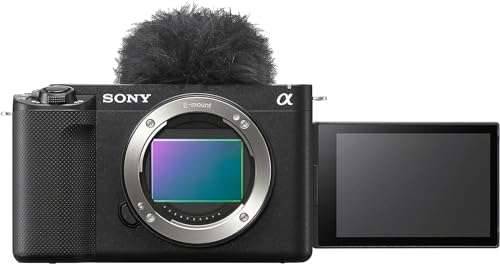
The Sony ZV-E1 offers the strongest pure video quality of the cameras in this list. Its 12.1-megapixel full-frame sensor is closely related to the sensor platform used in Sony’s higher-end video cameras, prioritizing sensitivity, dynamic range, and high-frame-rate video rather than high-resolution photography.
The full-frame sensor performs particularly well in poorly controlled lighting. It produces cleaner shadows and more natural background separation than the smaller sensors in the action cameras, Pocket 3, or EOS R50 V. The camera supports numerous 10-bit 4K recording formats, while 4K/120fps recording can be enabled through Sony’s upgrade license system in supported regions.
Sony also added several tools specifically for one-person productions. AI Auto Framing can crop into the 4K image and adjust the composition as a recognized subject moves around the scene. Framing Stabilizer combines subject recognition with Dynamic Active stabilization to maintain a more consistent position for the presenter during handheld recording.
These features make the ZV-E1 unusually capable for interviews, cinematic travel videos, documentary-style content, and professional YouTube channels. Its autofocus is dependable, its in-body stabilization works well, and Sony’s large E-mount lens catalog provides options ranging from ultra-wide vlogging lenses to bright cinematic primes.
The small body creates some compromises. Full-frame lenses can make the complete setup heavier than the camera itself, and using stronger stabilization or AI framing modes narrows the field of view. The ZV-E1 also has only one memory card slot.
Heat is the more important limitation. The compact body does not include the active cooling system found in larger cinema cameras, and extended 4K recording—particularly at high frame rates or in warm environments—can trigger thermal protection. Independent tests have produced different recording times, but creators filming uninterrupted events should treat this as a genuine consideration.
Who It’s For?
The ZV-E1 is designed for experienced creators who prioritize cinematic image quality, reliable autofocus, low-light performance, and professional color grading. It is an excellent fit for filmmakers, commercial creators, high-end YouTubers, and solo operators who want much of Sony’s cinema-camera performance in a smaller body.
It is excessive for casual creators who primarily publish short social videos. It is also not the safest choice for recording long conferences, performances, or events without interruption. The Canon EOS R50 V offers better value for beginners, while the Pocket 3 is far easier to carry and operate during everyday travel.
Pros
- Outstanding full-frame video quality
- Excellent performance in low light
- Strong dynamic range and 10-bit recording
- Reliable subject-detection autofocus
- Effective in-body stabilization
- AI Auto Framing and Framing Stabilizer
- Large selection of E-mount lenses
- Professional color and picture-profile options
Cons
- Expensive compared with the other cameras here
- Can overheat during extended high-quality recording
- Only one memory card slot
- Strong stabilization modes crop the image
- Full-frame lenses can make the setup heavy
- Low still-photo resolution for the price
Which Vlogging Camera Should You Buy?
The right camera depends less on headline resolution and more on how you plan to record.
The DJI Osmo Pocket 3 is the best all-around choice for most solo vloggers. It is small, mechanically stabilized, easy to operate, and capable of producing attractive footage without additional lenses or a gimbal.
Choose the DJI Osmo Action 6 when durability, waterproofing, long battery life, and nighttime action footage matter most. The GoPro Hero13 Black remains the better fit for creators who value GoPro’s extensive accessory system and specialized Lens Mods.
The Canon EOS R50 V is the most logical entry point into interchangeable-lens video. It provides strong autofocus and useful professional tools without the cost of a full-frame setup, although it works best with stabilized lenses or a tripod.
The Insta360 X5 is the most creative option. It lets you record first and decide where the camera should point later, but it requires more time in post-production.
Finally, the Sony ZV-E1 is the premium choice for creators who care most about cinematic results. Its full-frame sensor, autofocus, stabilization, and low-light performance are exceptional, but its price and heat limitations make it better suited to experienced creators than beginners.