Best Picks Available: Most Reliable Water Filters – Countertop/Under-Sink RO Systems?
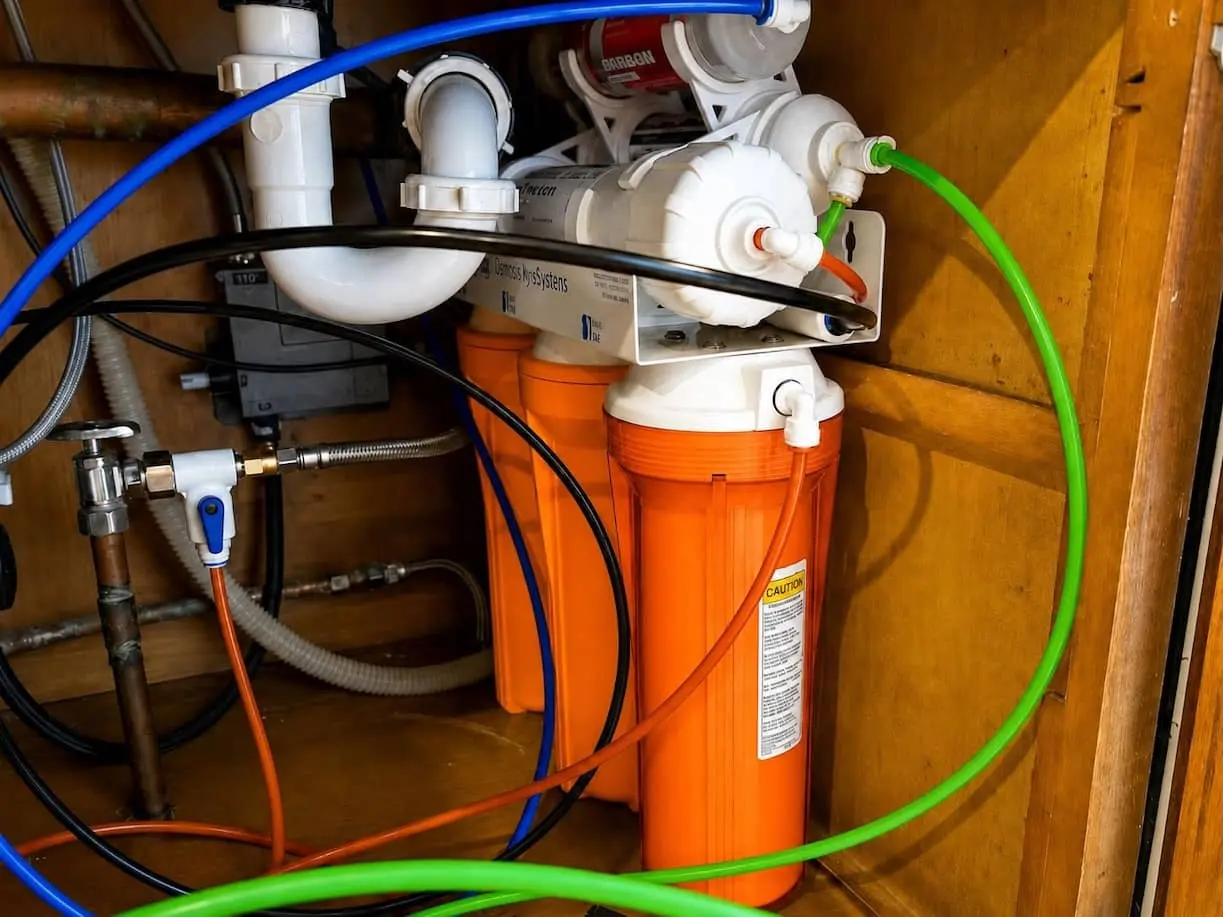
We compared countertop, pitcher, and under-sink water filters to find the best options for different contaminants, households, and installation needs.
Shopping for a water filter sounds simple until you start comparing the details. One model may remove lead but leave fluoride untouched. Another may offer excellent reverse-osmosis filtration but waste several gallons of water for every gallon it produces. Even products carrying the same NSF standard may be certified for entirely different contaminant-reduction claims.
That is why there is no single water filter that is right for every home. Your best option depends on what is actually in your water, whether you rent or own, how much filtered water your household uses, and how much maintenance you are willing to take on. The AquaTru Carafe, for example, brings certified RO filtration to renters, while systems such as the APEC ROES-50 and iSpring RCC7AKF3 make more sense for homeowners with heavier water demands.
For this guide, we compared eight popular systems across four broad categories: countertop reverse osmosis, under-sink reverse osmosis, direct-connect filtration, and gravity-fed pitchers. We examined certified contaminant-reduction data, filter capacity, flow, water waste, installation requirements, and long-term upkeep to determine where each system makes the most sense.
Our Top Picks for the Best Home Water Filters in 2026
AquaTru Carafe
- REMOVES WHAT ORDINARY PITCHERS LEAVE BEHIND
- NO PLUMBING, NO DRILLING, NO INSTALLATION
- LONG-LASTING 4-STAGE FILTRATION SYSTEM

The AquaTru Carafe brings serious reverse-osmosis filtration to people who cannot….or simply do not want to, modify their plumbing. Its four-stage system is certified by IAPMO to NSF/ANSI standards 42, 53, 58, 372, and 401 for 84 contaminants. In certified testing, it averaged 99.2% lead reduction, 96.4% fluoride reduction, 98.3% nitrate reduction, 99.9% PFOA/PFOS reduction, and 94.4% TDS reduction. That is far more comprehensive protection than you generally get from a basic gravity-fed pitcher.
Convenience is the real selling point. There are no feed-water lines to connect or holes to drill: fill the removable tap-water tank, press a button, and the machine delivers purified water into a 64-ounce borosilicate-glass carafe that can go straight into the refrigerator.
Filter reminders also take some of the guesswork out of maintenance. The pre/carbon filter is rated for six months or 300 gallons, the VOC filter for one year or 300 gallons, and the RO membrane for two years or 600 gallons.
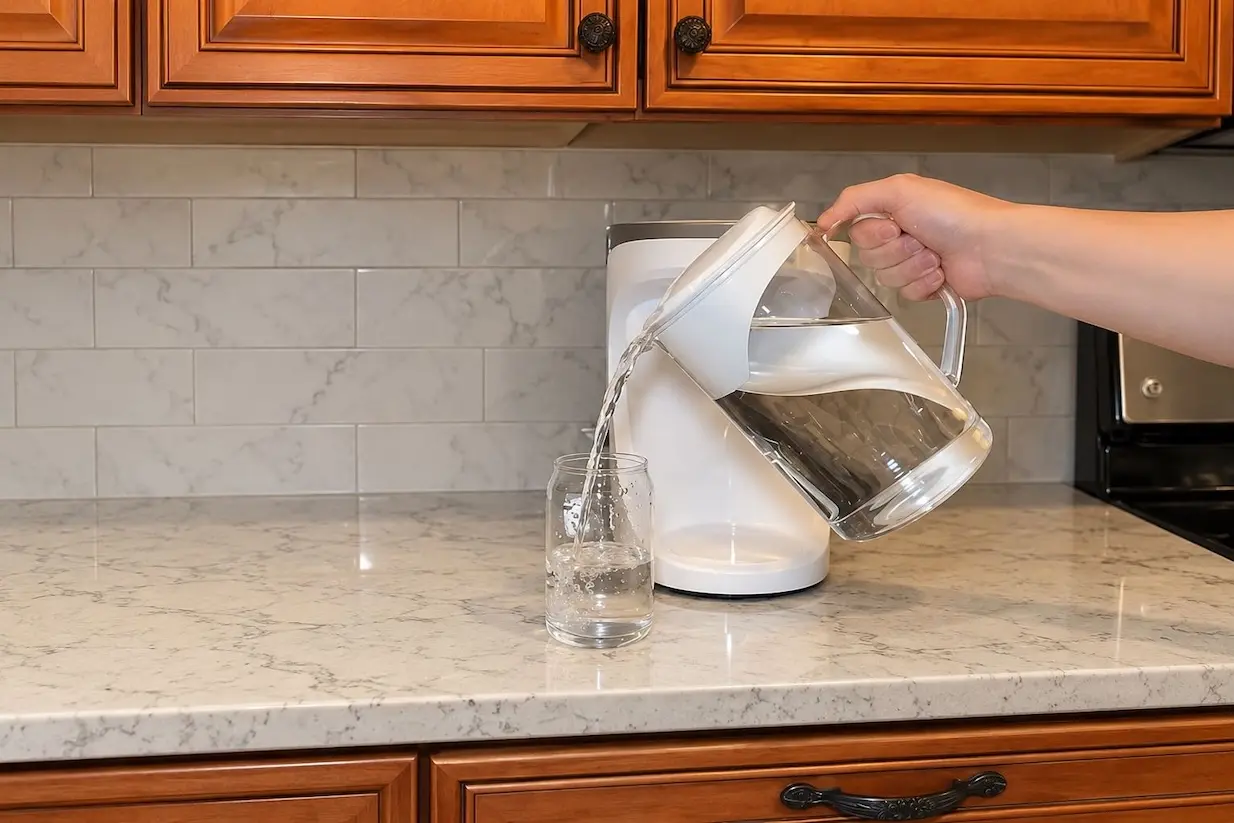
Still, this is closer to a countertop appliance than an ordinary pitcher. It requires electricity, occupies 14 inches of counter depth, produces water in half-gallon batches, and requires you to refill the raw-water tank and empty the rejected water. Under rated conditions, approximately 63% of the incoming water becomes treated water.
AquaTru also advises against using it with water harder than 10 grains per gallon unless that water is softened first. For singles, couples, renters, and offices, the Carafe offers an excellent mix of filtration and portability. Large families will find an under-sink system such as the APEC or iSpring more practical.
iSpring RCC7AKF3 Value Pack

The RCC7AKF3 is essentially iSpring’s RCC7AK alkaline reverse-osmosis system bundled with an extra set of three prefilters. The core system is certified to NSF/ANSI 58 and uses six filtration stages, including a remineralization stage that adds minerals back after the RO membrane. That extra stage matters mainly for taste: conventional RO water can taste flat after most dissolved minerals have been removed, while the iSpring produces a more spring-like flavor and slightly higher pH. It should be viewed as a taste feature rather than a source of special health benefits.
The filtration itself is difficult to fault. TechGearLab tested the RCC7AK….the same core system included in this package; and found that it reduced lead, arsenic, uranium, and lithium to undetectable levels in its samples. It also reduced total PFAS by 91%, fluoride by 99%, nitrates by 95%, and sulfate by 99%, while earning a top score for microplastic filtration. Those results place it close to the best-performing RO systems in the group.
There are also some thoughtful ownership details. The system runs without electricity, its transparent first-stage housing makes sediment buildup visible, and its top-mounted faucet is easier to tighten than faucets that require working in a cramped cabinet. The included spare prefilters further improve the value of this particular package.
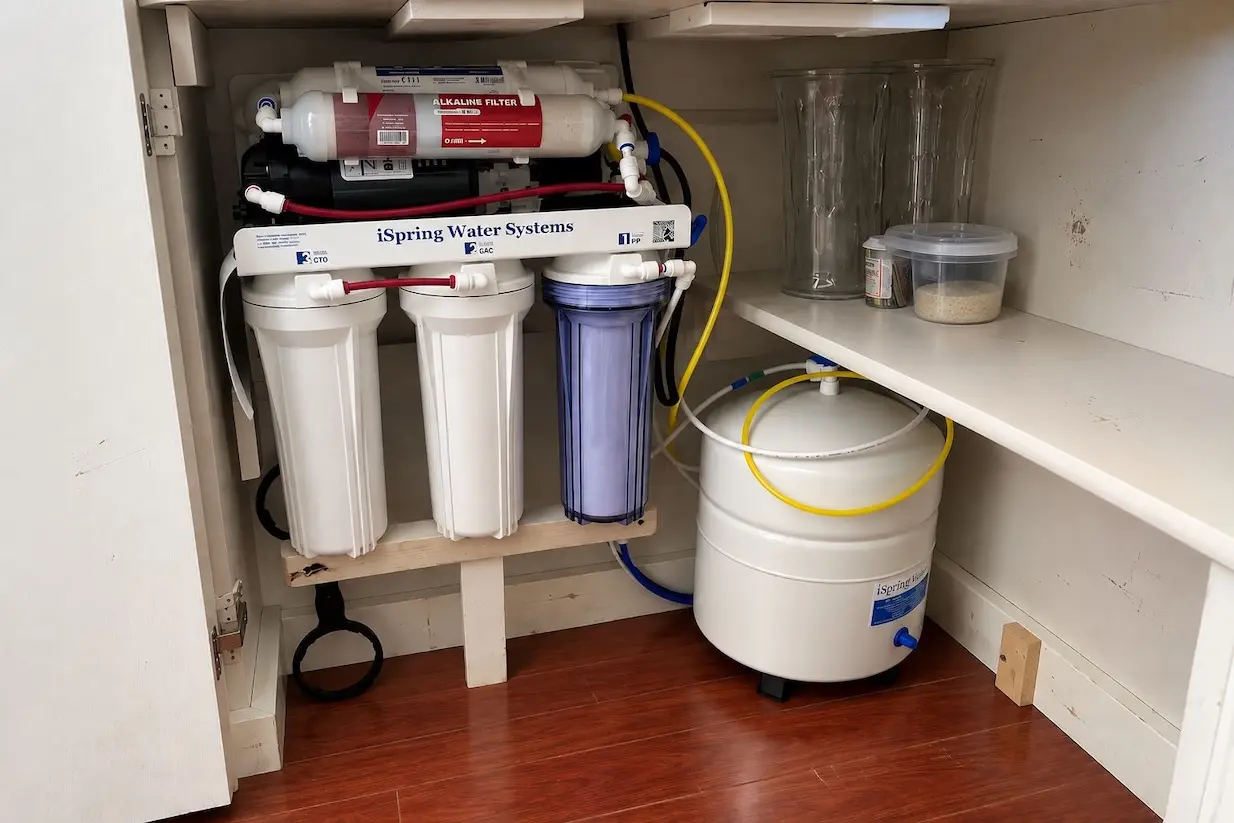
The tradeoff is complexity. At roughly 27 pounds and 18.5 inches tall, the system and its storage tank consume a substantial amount of cabinet space. Installation involves the cold-water supply, drain line, tank, faucet, and several filter housings, while TechGearLab measured a two-to-one wastewater-to-filtered-water ratio.
Choose the iSpring if you want broad RO filtration but dislike the stripped-down taste of highly purified water. If maximum simplicity and lower maintenance costs matter more, the APEC ROES-50 is the cleaner value proposition.
Brondell Coral UC300 Under Sink Water Filtration System

This Brondell system is a really reliable pick for municipal water users who want certified contaminant reduction without the wastewater, demineralization, and bulky storage tank associated with reverse osmosis. Its sediment, pre-carbon, and carbon-block filters are WQA certified to NSF/ANSI standards 42, 53, and 401. Certified testing showed 99.2-99.7% lead reduction, 99% PFOA/PFOS reduction, at least 99.5% microplastic reduction, and 98.6% chloramine reduction. It also addresses mercury, asbestos, VOCs, cysts, pharmaceuticals, and several other emerging contaminants.
All three filters are rated for 600 gallons or 12 months, based on approximately 2.6 gallons of daily use. An LED on the included faucet reminds you when replacement time arrives, and the twist-and-seal cartridges should be less awkward to service than the screw-on housings used by many traditional RO systems. Because the Coral does not produce wastewater or require electricity, it largely disappears into the background once installed.
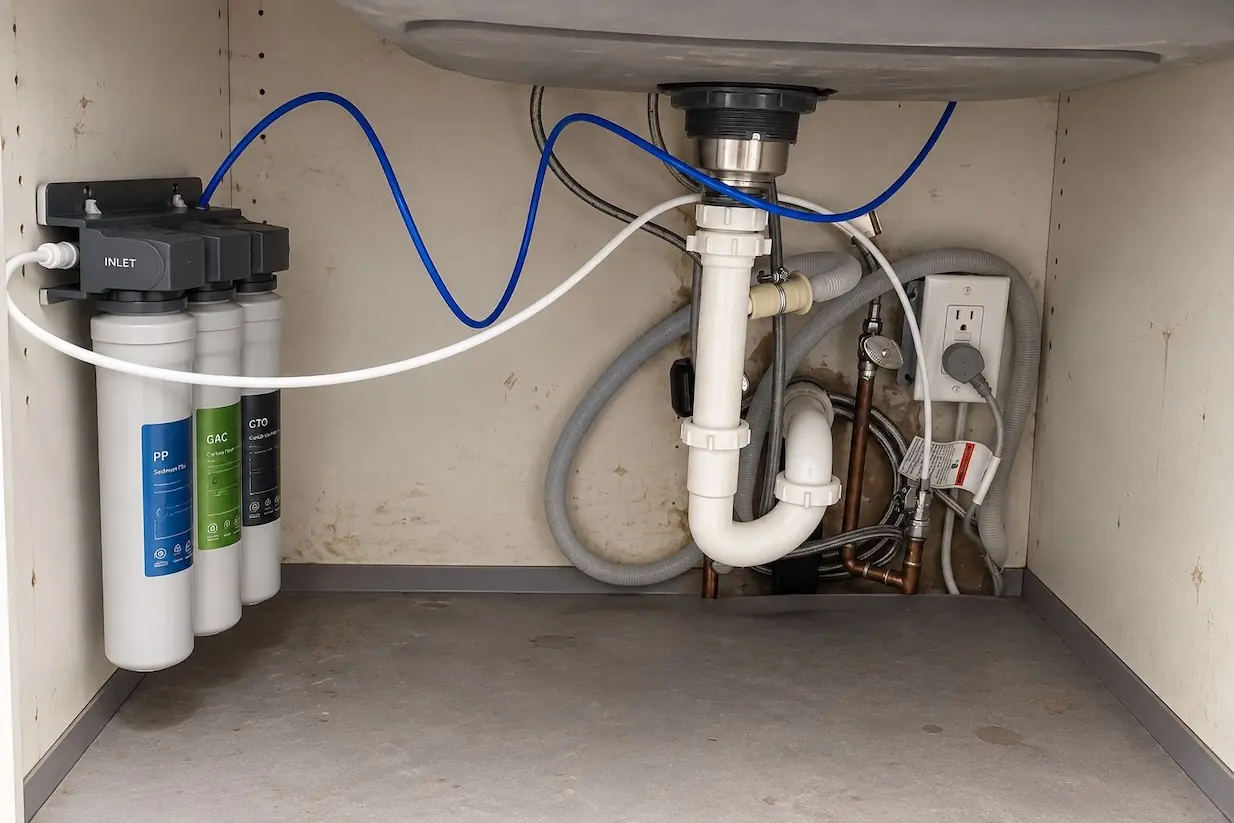
The catch is that its dedicated faucet needs a separate 7/16-inch opening in the sink or counter. Its rated 0.5-gallon-per-minute flow is also intended for drinking water rather than quickly filling a large cooking pot. More importantly, this is not an RO system: it is not designed to remove fluoride, nitrates, sodium, or general dissolved solids.
For homes primarily concerned about lead from old plumbing, chloramine, PFAS, microplastics, or unpleasant municipal-water flavor, the UC300 offers a compelling balance of certified performance and manageable upkeep. The Aquasana Direct Connect is more convenient if you do not want another faucet, while the APEC is better for water with high fluoride, nitrate, or TDS levels.
APEC Water ROES-50, 5-Stage Under Sink Reverse Osmosis System

The APEC ROES-50 is an old-school reverse-osmosis system in the best sense: it lacks smart displays and quick-change cartridges, but puts most of its cost into broad and reliable filtration. In TechGearLab’s testing, it reduced lead, arsenic, uranium, lithium, and PFAS to undetectable levels. It also removed 98% of fluoride, 95% of nitrates, and 99% of sulfate, while earning top marks for microplastics. Few systems in its price range offer comparable contaminant coverage.
The five-stage design uses sediment and carbon prefilters, a 50-gallon-per-day RO membrane, and a final coconut-shell carbon filter to polish the water’s flavor after it leaves the four-gallon storage tank. APEC recommends replacing the three prefilters every six to twelve months, while the RO membrane and post-filter can last two to four years. TechGearLab estimated annual maintenance at approximately $75, which is especially attractive for families that consume a lot of filtered water.
There is no disguising the installation, though. The system needs a dedicated faucet, a drain connection, considerable cabinet space, and enough access to unscrew multiple filter housings. TechGearLab also measured three gallons of wastewater for every gallon of filtered water, making it substantially less efficient than newer RO systems.
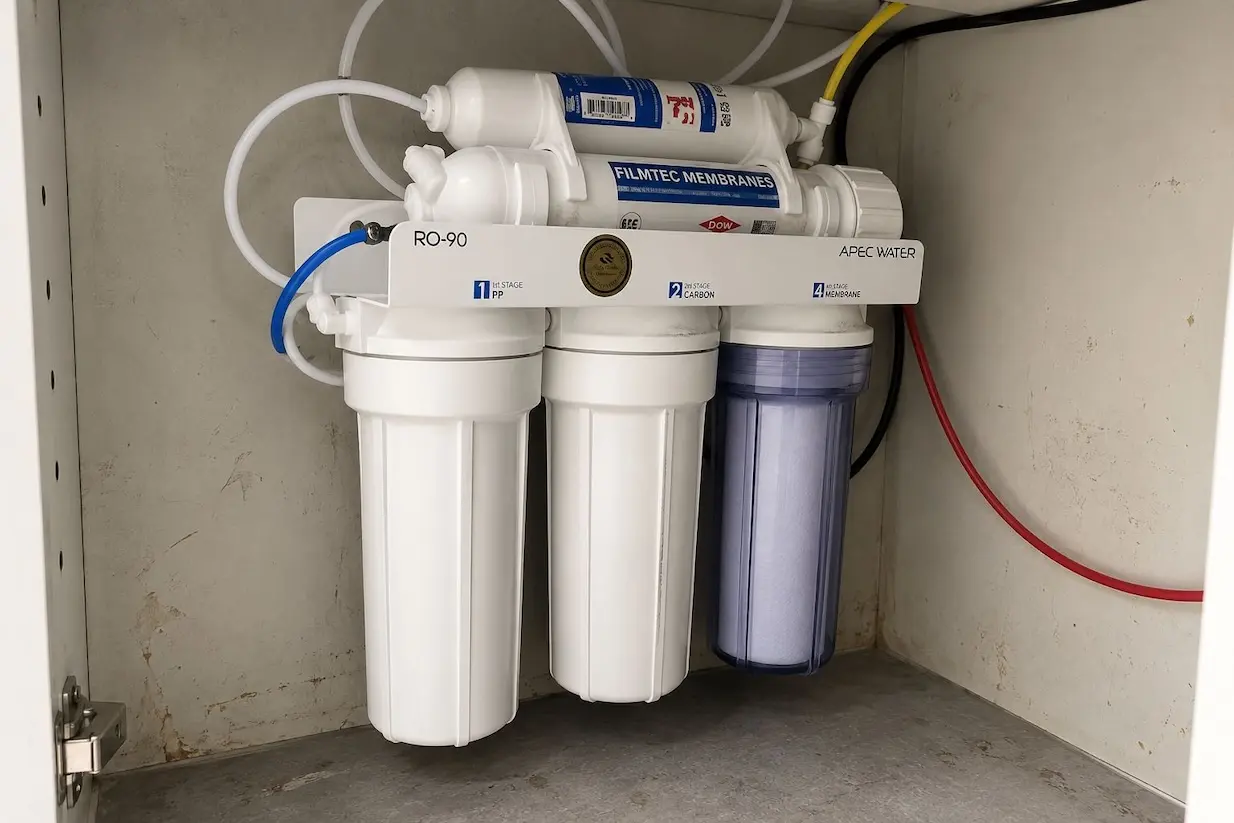
If you own your home, have enough room under the sink, and care more about filtration than modern conveniences, the ROES-50 is one of the strongest long-term values available. The iSpring is preferable if you want remineralized water, while the AquaTru Carafe is far easier for renters and anyone unwilling to modify the sink.
Aigerri UV Countertop Reverse Osmosis
- Generous 5L Large Capacity & Complete Filter Set
- High-Efficiency 5:1
- No Installation Needed, Ready for Instant Use

On paper, the Aigerri checks nearly every box for a modern countertop purifier. It combines multi-stage RO filtration, UV treatment, and mineral enhancement in a machine that requires no plumbing. Its five-liter raw-water tank and two-liter purified-water tank are reasonably sized, output is listed at approximately 1.8 cups per minute, and the claimed five-to-one purified-to-wastewater ratio would make it significantly more efficient than many conventional RO systems.
The problem is not the design….it is the documentation. Retail listings advertise NSF/ANSI 372 certification, but Standard 372 concerns lead content in the materials that contact water. It does not certify that the machine removes lead, PFAS, bacteria, viruses, or other contaminants. Reverse-osmosis performance normally falls under NSF/ANSI 58, while UV disinfection claims require separate performance evidence. The manufacturer’s own page currently says certified laboratory data should be added when final reports become available.
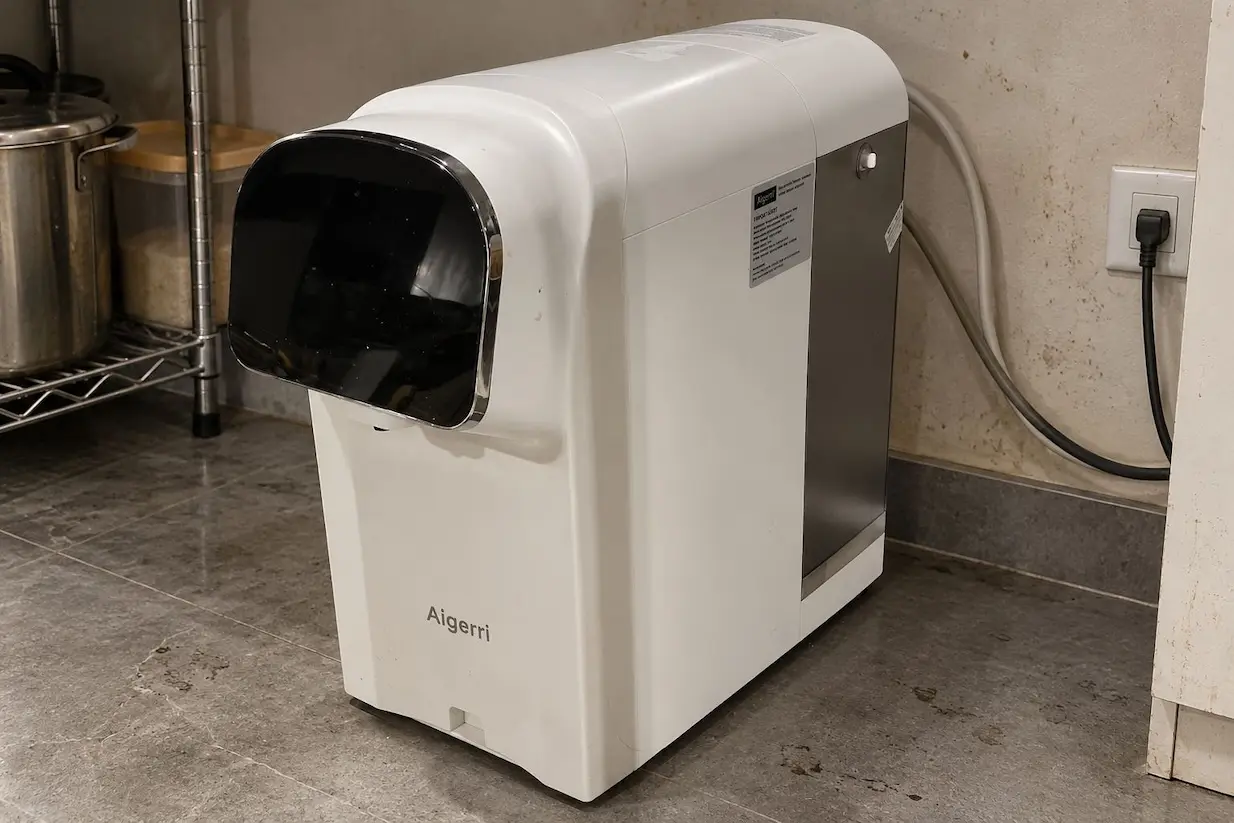
That same page still contains placeholders for filter lifespan, replacement-cartridge pricing, warranty terms, and even parts of the usage guidance. Consequently, it is impossible to calculate long-term ownership cost or verify how well contaminant reduction holds up over the life of the filters. The manufacturer currently advises using it with municipal tap water rather than microbiologically unsafe or unknown water.
The Aigerri may be convenient for a rental apartment or office, but convenience is not enough for a product responsible for drinking-water safety. Until finalized performance data and relevant certifications are published, the AquaTru Carafe is the more defensible countertop recommendation. It provides a similar no-install experience with a much clearer IAPMO-certified contaminant-reduction record.
Aquasana Claryum Direct Connect
- Easy DIY Under Sink Filter Installation
- Clean & Healthy Water Filtration
- Retains What Makes Your Water Healthy

The Aquasana Claryum Direct Connect eliminates one of the biggest annoyances of under-sink filtration: installing another faucet. It connects directly to the existing cold-water line and filters everything coming from the cold side of your kitchen tap. Its 1.5-gallon-per-minute rated flow is much faster than most dedicated drinking-water systems, making it practical for washing produce and filling cooking pots as well as drinking.
Its certification is equally convincing. Claryum is IAPMO certified to NSF/ANSI standards 42, 53, and 401 for 78 contaminants, including 99% lead and microplastic reduction, 95% PFOA/PFOS reduction, and more than 96% reduction of chlorine and chloramine. It also addresses mercury, cysts, asbestos, VOCs, pesticides, and several pharmaceuticals while retaining calcium, magnesium, and potassium.
Installation requires no drilling and the single cartridge twists off for replacement. The filter is rated for 784 gallons or six months, and its narrow three-inch body occupies far less cabinet volume than a traditional RO system. However, it is 20 inches tall, so checking vertical clearance before ordering is essential.
Because all cold water passes through the cartridge, households that use the kitchen tap heavily may reach the 784-gallon limit well before six months. It also does not remove fluoride or lower TDS. For ordinary municipal water, especially where lead, chloramine, PFAS, or microplastics are the main concerns, the Direct Connect is remarkably easy to live with. For high fluoride, nitrate, salinity, or well-water concerns, choose a certified RO system instead.
Epic Smart Shield
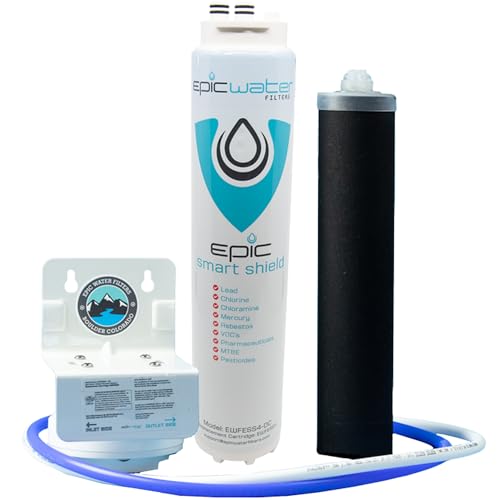
The Epic Smart Shield takes a refreshingly simple approach: one large solid-carbon-block cartridge installed directly on the kitchen’s cold-water line. It is certified by IAPMO to NSF/ANSI standards 42, 53, and 401 and is rated for 651 gallons. Its certified scope covers contaminants such as lead, chlorine, VOCs, cysts, mercury, and selected emerging compounds, while beneficial dissolved minerals remain in the water.
Epic also publishes follow-up test figures showing greater than 98% PFOA and greater than 99% PFOS reduction. Those PFAS results are useful supporting evidence, but they should be distinguished from contaminant claims included within the accredited IAPMO certification itself. Buyers specifically prioritizing PFAS may therefore prefer Aquasana’s more clearly documented certified PFAS claim.
Day-to-day convenience is excellent. The Smart Shield uses your existing faucet, has a tested flow rate of 1.25 gallons per minute, and needs no separate hole in the countertop. Depending on household use, Epic recommends replacing the cartridge every nine to sixteen months. The housing is narrow, although its approximately 20-inch height means it still requires substantial vertical clearance.
Homes with visible sediment, aging plumbing, or well water may also need Epic’s separate sediment prefilter to prevent premature clogging. Still, for treated municipal water, the Smart Shield offers an appealing mix of easy installation, strong flow, and infrequent cartridge changes. Aquasana has the advantage in certified PFAS documentation and slightly faster flow; Epic counters with a longer rated cartridge life and lower initial cost.
LifeStraw Home
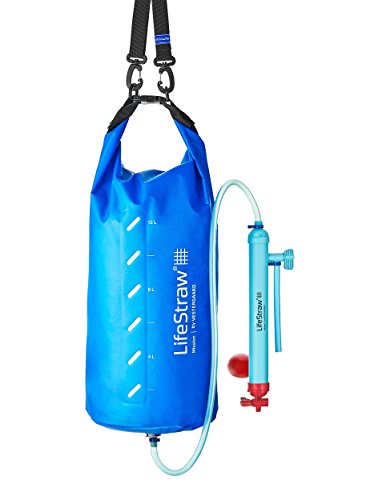
Most water-filter pitchers focus on chlorine, lead, and taste. The LifeStraw Home goes further by combining a 0.2-micron membrane with a separate activated-carbon and ion-exchange filter. The membrane is independently tested to remove 99.999999% of bacteria, 99.999% of parasites, and 99.999% of microplastics. Meanwhile, the second filter reduces lead, mercury, PFAS, chlorine, pesticides, and several emerging contaminants without stripping out magnesium and potassium.
Its certification record is unusually broad for a gravity pitcher. LifeStraw Home is WQA certified to NSF standards 42, 53, and 401 for claims including chlorine, lead, mercury, cysts, turbidity, microplastics, and selected pharmaceuticals. Its microbiological testing also meets EPA and NSF P231 protocols for bacteria and parasite removal.
That extra protection comes with extra upkeep. The membrane lasts 264 gallons or approximately one year, but the carbon and ion-exchange filter is rated for only 40 gallons or around two months. Filtration is also slower than with a basic carbon pitcher, and the seven-cup capacity can feel restrictive if several people rely on it throughout the day.
For renters, dorm rooms, or households that want microbiological protection without buying an electric countertop RO appliance, the LifeStraw Home occupies a unique niche. It is less suitable for families that need large quantities of water quickly, and it should not replace an RO system when fluoride, nitrates, sodium, or broad TDS reduction are the main priorities.
How We Chose These Water Filters
We did not rank these products according to the number of filtration stages or contaminants advertised on their packaging. A six-stage system is not automatically better than a three-stage one, and a claim to remove “over 1,000 contaminants” is only meaningful when supported by specific laboratory results or third-party certification.
Instead, we prioritized the following factors:
- Third-party certification from organizations such as WQA, IAPMO, and NSF.
- Published performance data showing which contaminants were tested and how much was removed.
- Independent laboratory results where available.
- Installation difficulty and required cabinet or countertop space.
- Flow rate, storage capacity, and daily convenience.
- Replacement-filter lifespan and likely long-term cost.
- Wastewater generated by reverse-osmosis systems.
- Whether the system suits municipal water, well water, or both.
APEC and iSpring were also included in TechGearLab’s independent testing. For the remaining products, we relied on official certification documents, published performance sheets, manuals, and verified technical specifications. We have not represented these products as personally laboratory-tested by us.
How to Choose a Water Filter
Test Your Water Before Buying Anything
The most important step is to determine what you are trying to remove. Buying the most expensive system available does not guarantee that it addresses the contaminants present in your home.
If you receive municipal water in the United States, begin with your utility’s annual Consumer Confidence Report. It contains laboratory results for the water leaving the treatment system. However, the report may not reveal contaminants entering your water from the pipes inside your building, such as lead from aging plumbing. The EPA requires community water systems to provide these annual reports to their customers.
Private-well owners carry more responsibility because well water is not routinely regulated or monitored by public authorities. The CDC recommends testing a private well at least once per year for total coliform bacteria, nitrates, total dissolved solids, and pH, with additional tests chosen according to local industrial, agricultural, and geological risks.
Do not rely on taste, smell, clarity, or a handheld TDS meter to determine whether water is safe. TDS meters estimate the total concentration of dissolved material; they do not identify individual contaminants such as lead, PFAS, arsenic, or bacteria.
Identify Your Main Contaminants
- Chlorine, chloramine, taste and odor
Municipal systems use disinfectants such as chlorine and chloramine to control microorganisms. These chemicals can leave water with a swimming-pool taste or medicinal odor even when present at permitted levels.
A certified carbon filter is usually sufficient when taste and disinfectant reduction are your only concerns. Look for NSF/ANSI 42 certification for chlorine and a specific chloramine claim if your utility uses chloramine. Brondell, Aquasana, and Epic are sensible choices because they provide filtered water on demand without producing RO wastewater.
- Lead and other heavy metals
Lead can enter drinking water through old service lines, solder, fixtures, and building plumbing. If lead is a concern, look for a product specifically certified for lead reduction under NSF/ANSI 53 or NSF/ANSI 58. A generic NSF logo or “lead-free materials” claim does not mean the system removes lead from water.
The AquaTru, Brondell, Aquasana, APEC, iSpring, Epic, and LifeStraw systems in this guide all provide varying levels of lead protection. The Waterdrop-style direct-connect category should be approached more carefully because some models are certified to contain lead-free materials without being certified to remove lead.
- PFAS
Activated carbon, ion exchange, and reverse osmosis can all reduce PFAS, but performance varies considerably between products and over the life of a cartridge. EPA research found that all three technologies can be effective when the filters are appropriately selected and replaced according to schedule.
Look for a specific PFAS reduction claim under NSF/ANSI 53 or 58. Certification to NSF/ANSI 401 by itself should not automatically be interpreted as PFAS certification. Among these products, AquaTru, Brondell, Aquasana, APEC, and iSpring provide some of the clearest PFAS documentation.
- Fluoride, nitrates, sodium and high TDS
Most carbon filters do not substantially reduce fluoride, nitrates, sodium, hardness minerals, or general dissolved solids. Reverse osmosis is normally the more appropriate treatment when these contaminants are present at elevated levels.
AquaTru, APEC, and iSpring all use RO membranes and demonstrate meaningful fluoride, nitrate, and TDS reduction. The Brondell, Aquasana, Epic, and LifeStraw systems are better suited to selective filtration where retaining naturally occurring minerals is preferred.
- Bacteria and parasites
Do not assume that every filter removes microorganisms. Standard carbon filters primarily address chemicals, taste, and selected metals. They are not substitutes for disinfection.
LifeStraw Home is unusual because its 0.2-micron membrane is tested for bacteria and parasite removal. UV systems may also inactivate microorganisms, but the UV stage should have relevant performance testing, such as NSF/ANSI 55, rather than relying solely on the presence of a UV lamp.
Water from an unknown or microbiologically unsafe source should be professionally tested and treated with an appropriately certified disinfection system. A conventional countertop or under-sink filter should not be used as the only safety measure.
Our Last Advice