Top 3 Mini Fridges for Dorm Rooms and Beyond
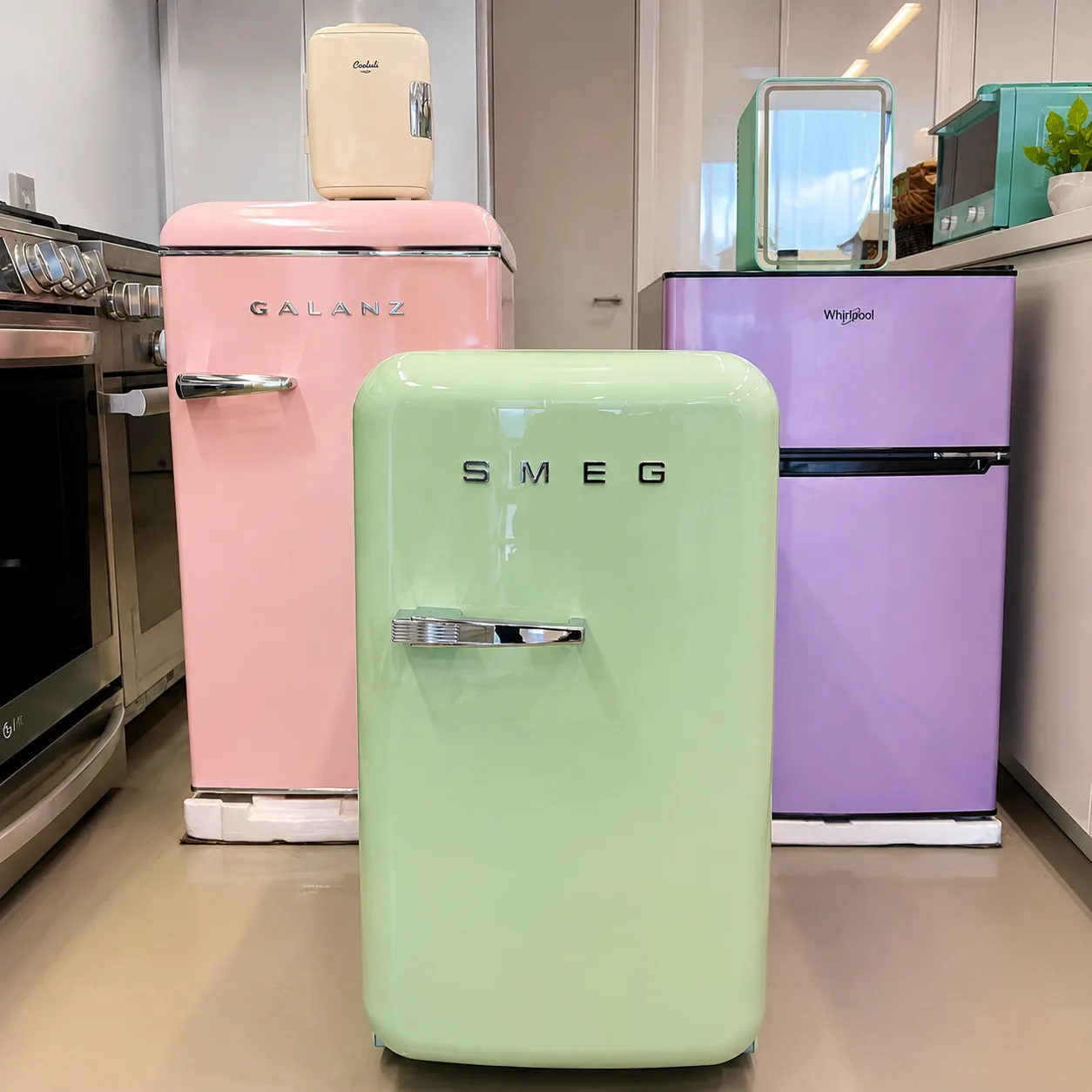
Shopping a mini fridge is mostly about deciding what you are willing to give up. A separate freezer takes away fresh-food space, while the smallest models can fit under a desk but quickly become cramped once you add bottles and leftovers. It is also worth checking the exact model number, as brands sometimes use “freezer” for a small chiller that cannot maintain normal freezer temperatures.
For this shortlist, we compared verified capacity, compartment design, dimensions and official energy information. Manufacturer noise figures are identified as such rather than presented as independent test results.
Our Compact Fridge Recommendations of 2026
Midea 3.1 Cu. Ft. WHD-113FSS1

The Midea WHD-113FSS1 is the best all-around mini fridge in this group. Unlike the single-door alternatives, it has a separate freezer with its own exterior door, making it better suited to anyone who wants to store both fresh groceries and properly frozen food.
Midea divides the 3.1-cubic-foot capacity into a 2.2-cubic-foot refrigerator and a 0.9-cubic-foot freezer. The company lists a refrigerator range of 33.8°F to 50°F and a freezer range of -11.2°F to 10.4°F. This means the upper compartment can handle frozen meals and ice cream rather than merely making a small tray of ice.
The interior is practical for a compact model. There are two glass shelves, three door racks and an LED light, while the reversible doors make it easier to position the fridge against either side of a dorm or office. At 18.5 inches wide, 19.9 inches deep and 33 inches tall, it uses roughly the same floor space as many single-door models but needs more vertical clearance.
Midea rates operating noise at 42 dBA and annual energy consumption at 270 kWh. Those are manufacturer figures, not our measurements. The energy use is higher than the smaller one-door models below, which is an expected tradeoff for maintaining a genuinely cold, separate freezer.
Manual defrosting is the main inconvenience, and the 2.2-cubic-foot fresh-food section can still feel tight if you store large containers. Even so, this is the most versatile option for a dorm resident, couple or office that needs a mini fridge to do more than chill drinks.
Upstreman 3.2 Cu. Ft. BR321

The Upstreman BR321 makes more sense for buyers who want as much refrigerated space as possible and do not need a real freezer. Although some of the product copy mentions ice cubes and calls it a fridge “with freezer,” Upstreman’s own specification table marks the model as having no freezer. Its listed temperature range is 33.8°F to 46.4°F, and the company specifically says it is unsuitable for storing ice cream.
That limitation gives the BR321 an advantage elsewhere. Its single-door cabinet dedicates most of the 3.2-cubic-foot interior to drinks, produce and fresh food instead of surrounding a separate frozen compartment with insulation. A crisper drawer and removable shelves also provide more flexibility for tall bottles or bulky containers.
The BR321 measures 18.7 inches wide, 17.4 inches deep and 33.1 inches tall. It has a reversible door but no interior LED light. Upstreman claims 38 dB of operating noise and energy use as low as 0.5 kWh per day; treat both as manufacturer estimates rather than lab-verified results.
Choose this model for a bedroom, office or dorm where fresh-food capacity matters more than frozen storage. If ice cream, frozen meals or long-term ice storage are part of the plan, the two-door Midea is the more appropriate choice.
BLACK+DECKER 2.5 Cu. Ft. BCRK25B
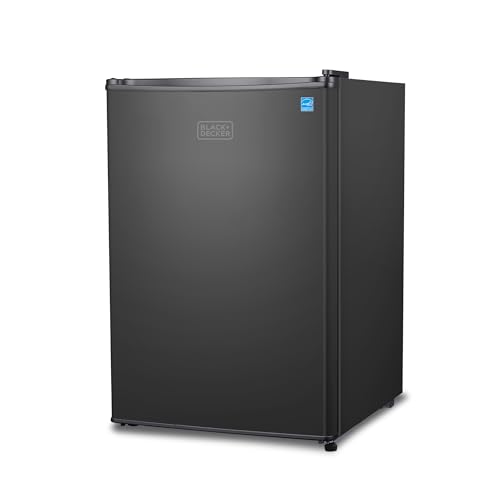
The BLACK+DECKER BCRK25B sits between the tall 3-cubic-foot models and the countertop-sized Magic Chef. Its 17.5-by-18.5-inch footprint and 26.6-inch height make it easier to place under shelving, while 2.5 cubic feet is still enough for one person’s drinks, snacks and a modest amount of fresh food.
The cabinet includes adjustable temperature control, a reversible door, a removable shelf and a small internal chilling compartment with an ice tray. An official EnergyGuide label estimates annual consumption at 212 kWh, and the model is ENERGY STAR certified. The chiller shares the main door and controls with the refrigerator, so it is less flexible than the Midea’s separate freezer.
This is the better fit when the Magic Chef is too small but a 33-inch-tall fridge would be awkward. However, buyers who regularly store frozen food should accept the Midea’s larger cabinet instead of choosing the BLACK+DECKER solely to save space.
How We Chose These Mini Fridges
We started with the features that materially change how a mini fridge works: usable refrigerator capacity, the presence of a separate freezer, exterior dimensions and annual energy consumption. We then checked each figure against manufacturer documentation, an official EnergyGuide label or an ENERGY STAR listing where available.
We did not treat a long feature list as evidence of better performance. A reversible door and adjustable shelves are useful, but they cannot compensate for a compartment that is too small or unable to reach the temperature your food requires. Manufacturer noise ratings are included only as claimed figures because we did not measure these units in the same controlled room.
Mini Fridge Buying Guide
Start With What You Plan to Store
A drinks fridge and a small primary refrigerator have different requirements. A 1.7-cubic-foot model works for cans, snacks and a few containers, while a 3-cubic-foot cabinet gives you more freedom to store produce, bottles and leftovers. Buying more capacity than you need can waste floor space and energy, but an undersized fridge becomes frustrating as soon as its shelves are full.
Do Not Confuse a Chiller With a Freezer
An internal icebox may make ice without maintaining safe long-term freezer temperatures. The USDA recommends keeping frozen food at 0°F or below. If you regularly buy ice cream or frozen meals, choose a model with a separate exterior freezer door and a published temperature range that reaches this target. In this group, the Midea is the clear choice.
Check the Dimensions, Then Check Them Again
Measure width, depth and height, but leave the ventilation space required by the manual as well. You should also account for the power plug and the room needed to open the door. A reversible hinge can solve some placement problems, though it does not help if a desk or shelf blocks the door itself.
Compare kWh, Not the Estimated Dollar Cost
EnergyGuide labels estimate annual electricity use under standardized conditions. The dollar figure can become outdated when local utility rates change, so annual kWh is the more useful number for comparing models. ENERGY STAR also notes that larger refrigerators generally consume more energy, although compartment design and efficiency can make two differently sized models surprisingly close.
Plan for Temperature Checks and Defrosting
The USDA advises keeping a refrigerator at 40°F or below. A basic appliance thermometer is worthwhile because dial numbers do not show the actual food temperature. Most compact models in this price range also require manual defrosting, so expect to empty the compartment when frost buildup begins reducing usable space.
Frequently Asked Questions
Can a mini fridge safely store milk, meat and leftovers?
Yes, provided it consistently holds 40°F or below. Place a refrigerator thermometer near the center of the cabinet, allow the unit to stabilize after installation and adjust the control if the temperature rises above that point.
Can I keep ice cream in the small freezer box?
Not reliably unless the compartment can maintain 0°F or below. The Midea has a separate freezer with a published range that reaches below 0°F. Upstreman explicitly states that the BR321 is not suitable for storing ice cream, while the small chillers in the BLACK+DECKER and Magic Chef are less capable than a true freezer.
Is the smallest mini fridge always the cheapest to run?
No. Capacity affects consumption, but insulation, compressor operation and compartment design matter too. The 1.7-cubic-foot Magic Chef is rated at 208 kWh per year, only slightly less than the 2.5-cubic-foot BLACK+DECKER at 212 kWh per year.